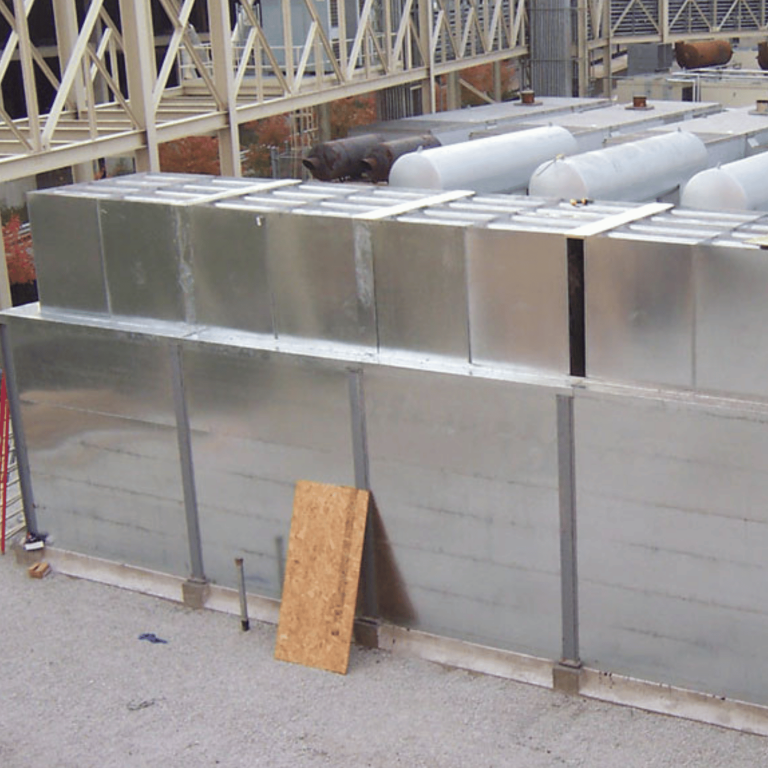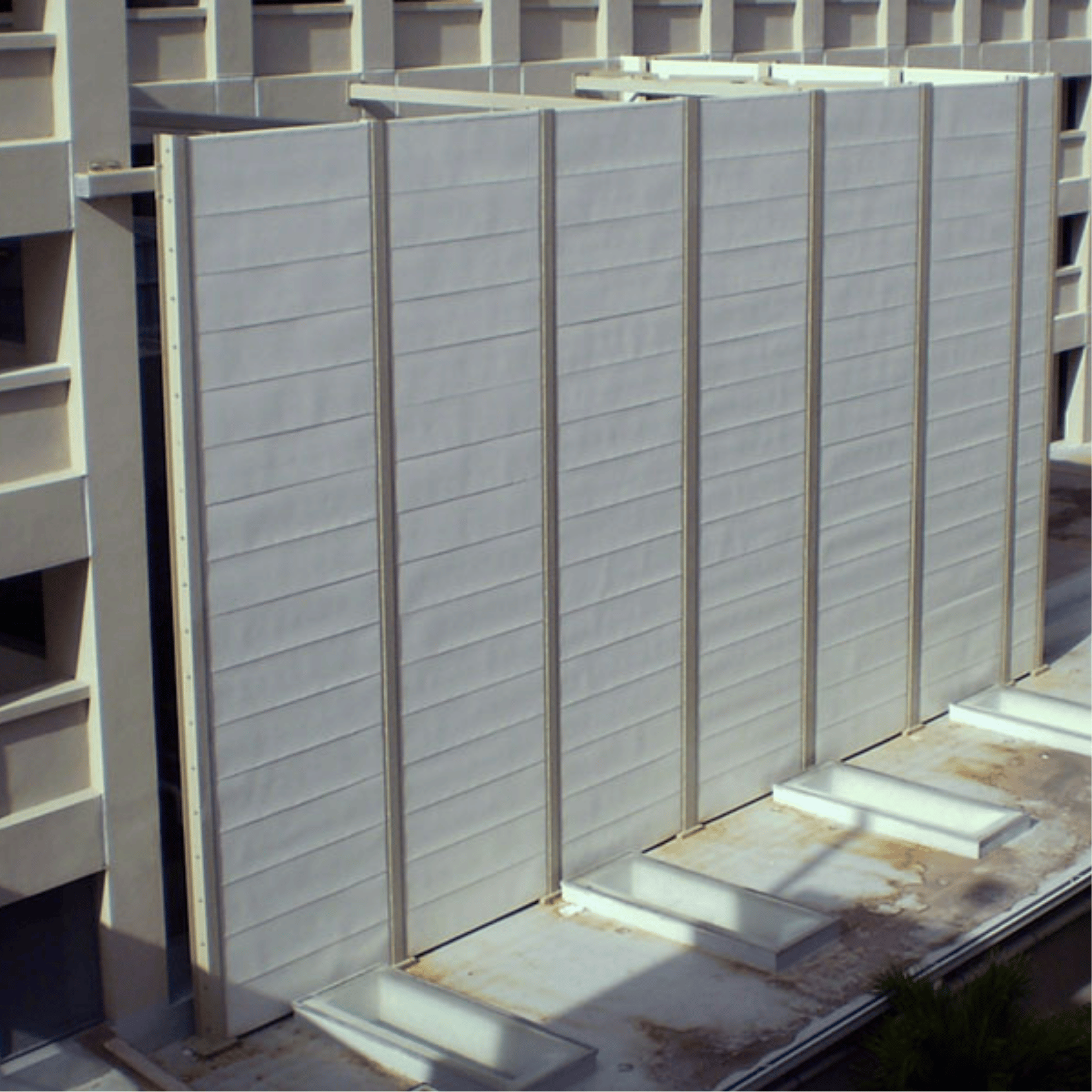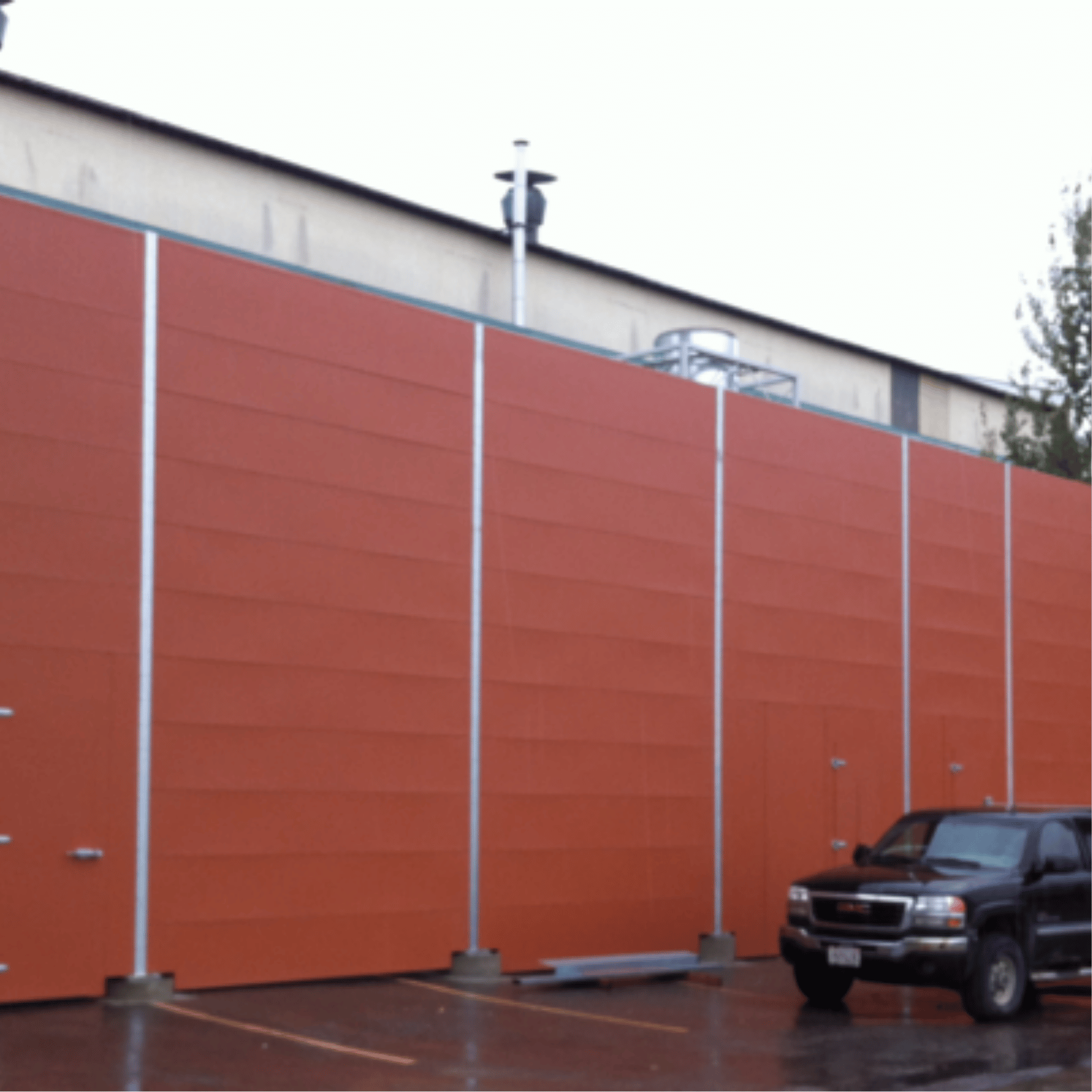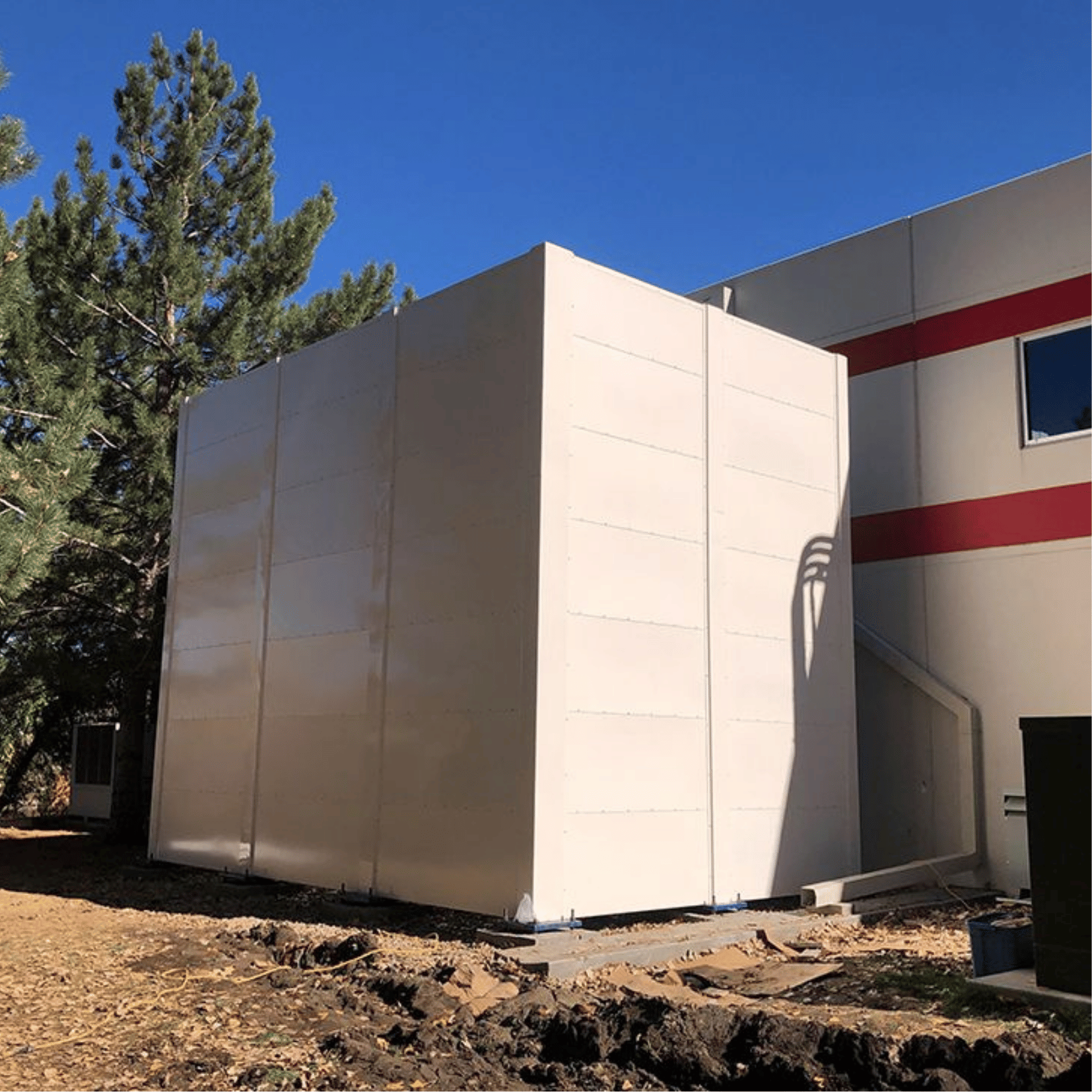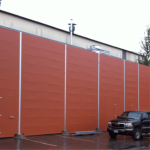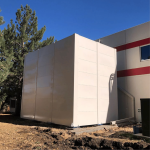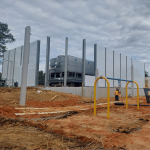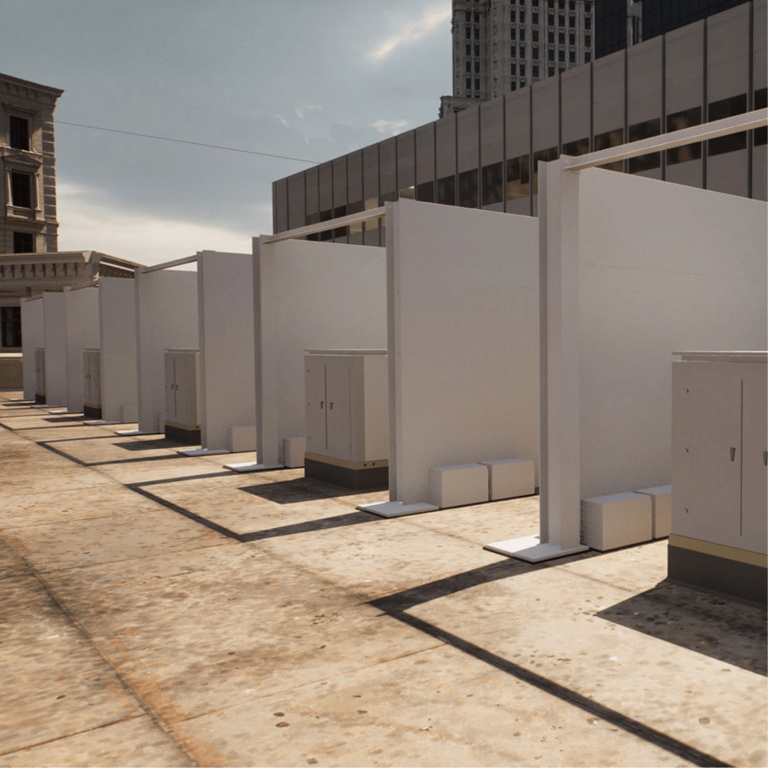
KINETICS® NOISEBLOCK™ Noise Barrier Walls are engineered acoustic barrier systems for rooftop HVAC equipment, chillers, cooling towers, generators, transformers, compressors and industrial noise sources across the UAE, GCC and MENA. Independently tested panels provide STC 40–43 sound-blocking performance and NRC 1.0 sound absorption for demanding outdoor, mechanical and environmental noise-control applications.
Engineered for Performance.
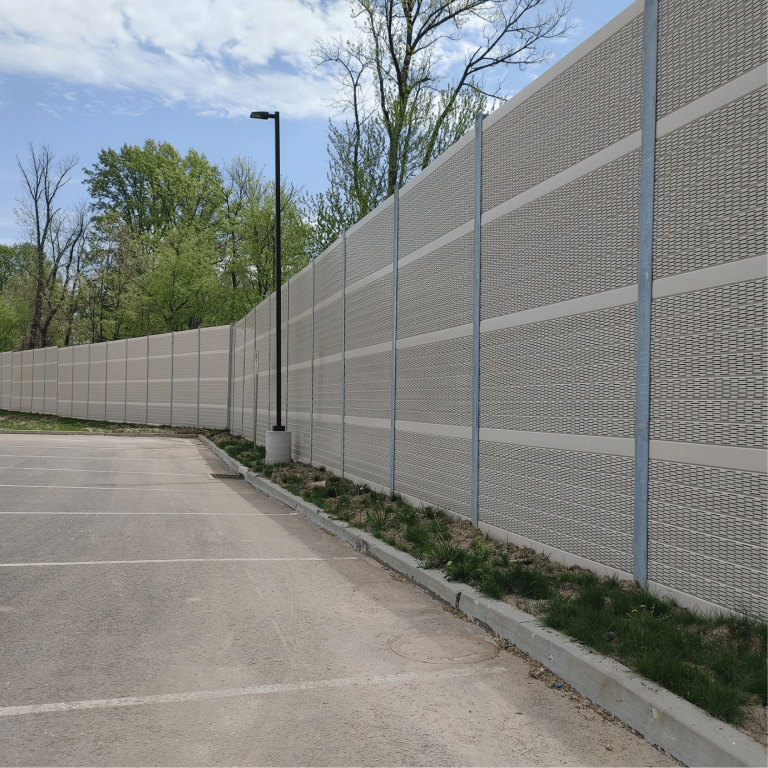
KINETICS® NOISEBLOCK™ Noise Barrier Walls are modular, engineered acoustic barrier systems designed to control noise from rooftop HVAC equipment, chillers, cooling towers, generators, transformers, electrical substations, compressors, industrial machinery and other stationary outdoor noise sources.
Designed for commercial, industrial, infrastructure, utility and environmental noise-control projects across the UAE, GCC, Middle East and MENA region, NOISEBLOCK™ combines high sound transmission loss with a highly absorptive acoustic surface.
The system can be engineered around the equipment layout, noise-source position, sensitive receiver locations, structural loading, ventilation requirements, equipment access and project acoustic criteria.
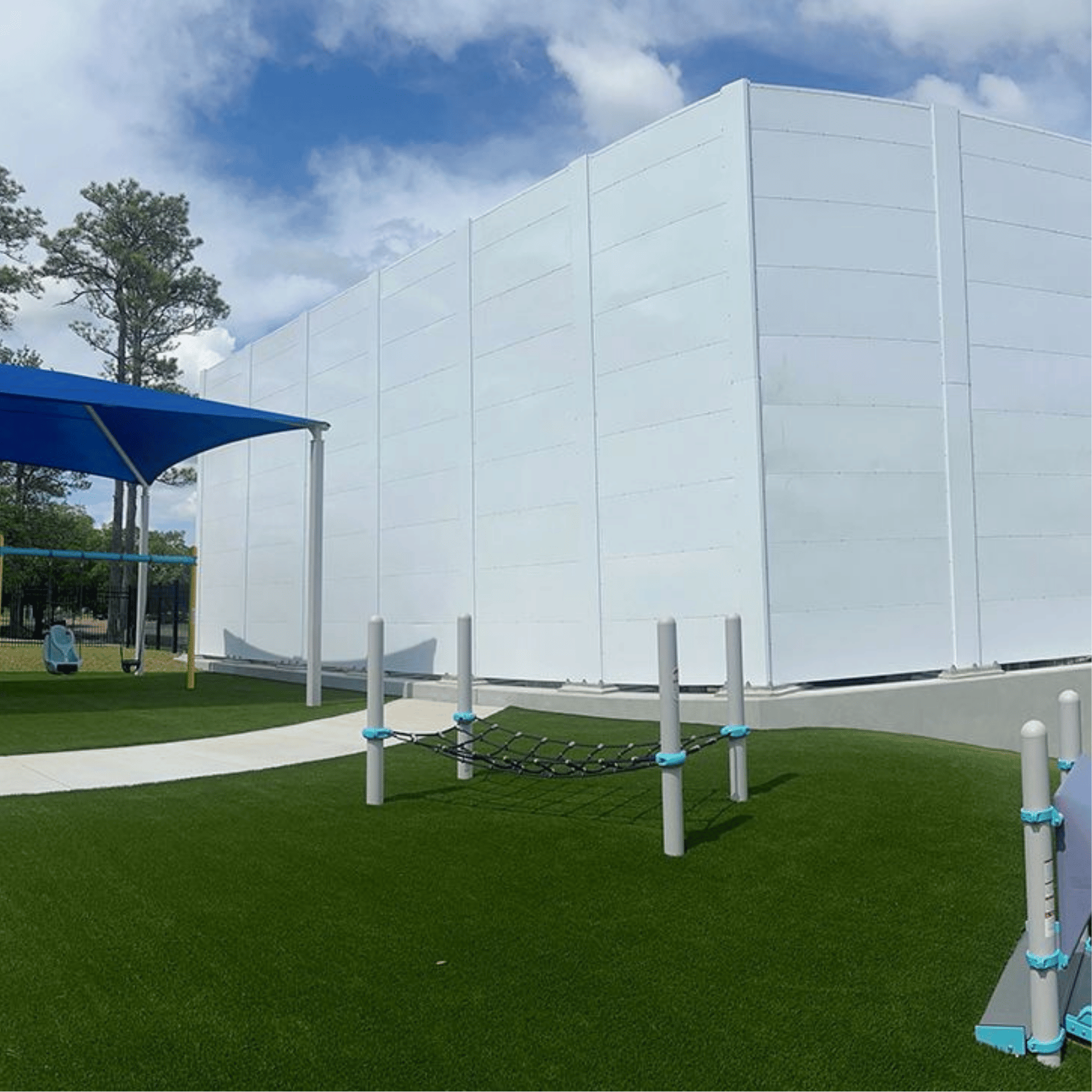
What is a NOISEBLOCK™ noise barrier wall? KINETICS® NOISEBLOCK™ is a modular acoustic barrier system installed between noisy equipment and a noise-sensitive receiver. The barrier interrupts the direct sound path while its absorptive surface reduces reflected acoustic energy. NOISEBLOCK panels provide published performance of STC 40–43 and NRC 1.0 and are designed for rooftop HVAC equipment, chillers, cooling towers, generators, transformers, compressors, utilities and industrial noise-control applications.
A noise barrier wall is an acoustic structure positioned between a noise source and a noise-sensitive receiver to interrupt the direct path of sound.
When correctly positioned, the barrier creates an acoustic sound-shadow zone behind the wall. Barrier height, length, location, panel transmission loss, source height, receiver height and the distance between the source, barrier and receiver all influence the final noise reduction.
Unlike a basic architectural equipment screen, KINETICS® NOISEBLOCK™ uses acoustic panels engineered to both block sound transmission and absorb incident sound energy.
This helps reduce direct noise propagation while limiting the amount of acoustic energy reflected back toward mechanical equipment and surrounding surfaces.
KINETICS® NOISEBLOCK™ is a modular acoustic barrier system installed between noisy equipment and a noise-sensitive receiver.
NOISEBLOCK panels provide published STC 40–43 sound-blocking performance and NRC 1.0 sound absorptionand are suitable for rooftop mechanical equipment, chillers, cooling towers, generators, transformers, compressors, utilities and industrial noise-control applications.
The barrier can be coordinated with KINETICS® acoustic louvers where ventilation must pass through the wall without creating an untreated direct sound path.
NOISEBLOCK™ panels have been independently laboratory tested for airborne sound transmission loss and sound absorption.
Published performance includes:
Published sound-absorption coefficients are:
| Frequency | 125 Hz | 250 Hz | 500 Hz | 1000 Hz | 2000 Hz | 4000 Hz | NRC |
|---|---|---|---|---|---|---|---|
| Absorption coefficient | 0.60 | 1.13 | 1.12 | 1.09 | 1.03 | 0.91 | 1.00 |
Published sound-transmission-loss data includes:
| Panel Construction | 125 Hz | 250 Hz | 500 Hz | 1000 Hz | 2000 Hz | 4000 Hz | STC |
|---|---|---|---|---|---|---|---|
| 16 ga solid / 22 ga perforated | 24 | 32 | 41 | 51 | 60 | 66 | 43 |
| 18 ga solid / 22 ga perforated | 21 | 28 | 39 | 48 | 56 | 58 | 40 |
STC is a laboratory classification of the panel’s sound-transmission performance. It should not be interpreted as the number of decibels that every installed barrier will reduce at a receiver.
Actual project noise reduction depends on barrier geometry, source spectrum, source and receiver height, distance, diffraction around the barrier, openings and other flanking paths.
Detailed technical information is available from the official KINETICS® NOISEBLOCK™ manufacturer product information.
Outdoor mechanical and industrial equipment can propagate airborne noise toward residential buildings, hotels, hospitals, schools, offices and neighbouring properties.
A correctly designed NOISEBLOCK™ system interrupts the direct line of sight between the equipment noise source and the sensitive receiver.
The absorptive surface also reduces acoustic energy striking the barrier instead of allowing the wall to operate only as a reflective screen.
The acoustic design should consider:
Kinetics Group can coordinate the barrier system with wider HVAC equipment noise control measures where multiple airborne and structure-borne noise paths must be addressed.
NOISEBLOCK™ double-wall acoustic panels are designed for demanding outdoor and industrial applications.
Published panel construction includes a solid external metal shell, perforated internal acoustic face, internal stiffening channels and acoustical fiberglass or mineral-wool infill.
Available panel materials include:
Material selection can therefore be coordinated with rooftop, coastal, industrial and other environmentally demanding project conditions.
The panel system uses tongue-and-groove joints to create a continuous barrier surface while allowing modular assembly.
Factory powder-coated, painted, galvanized and project-specific finish options can be selected according to the approved specification.
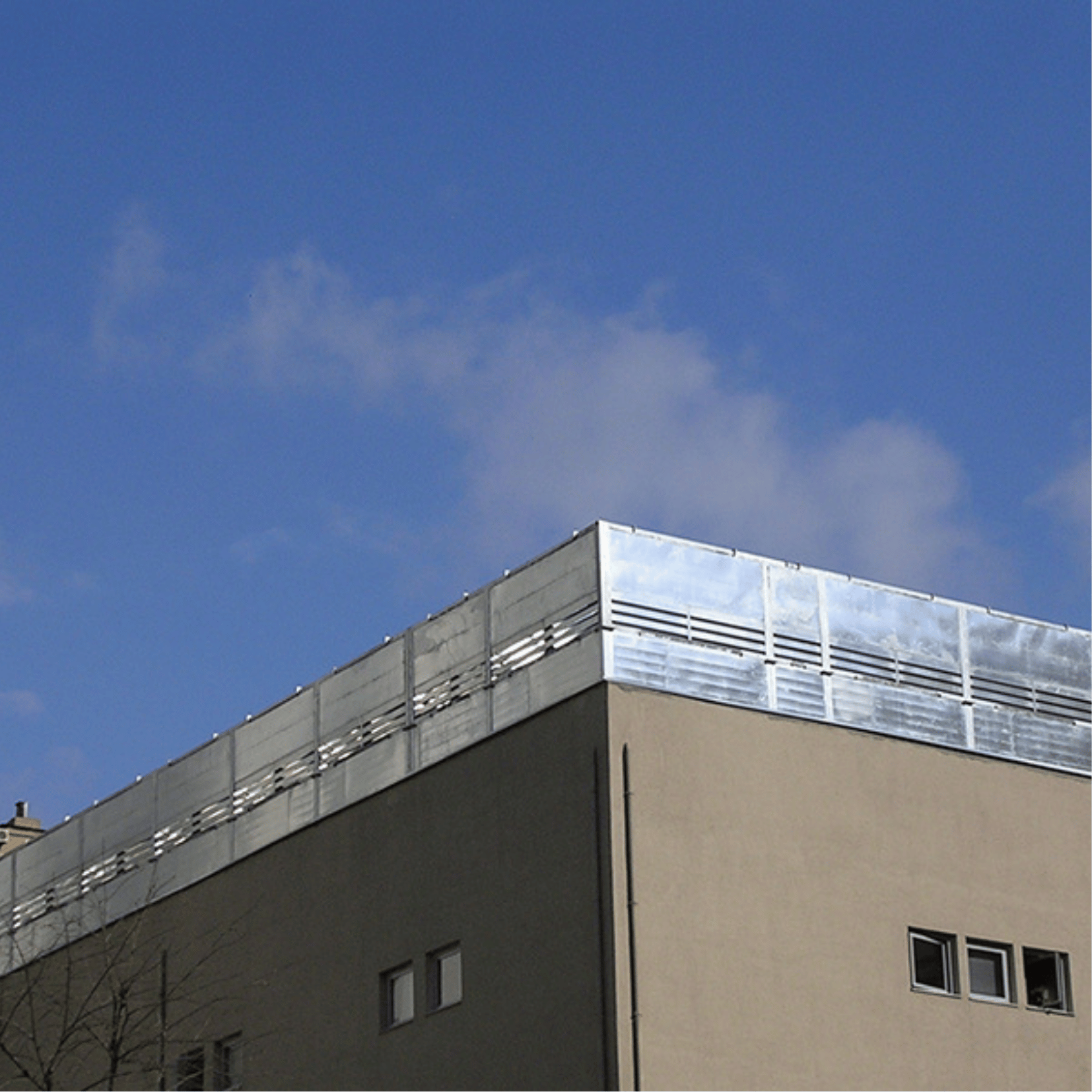
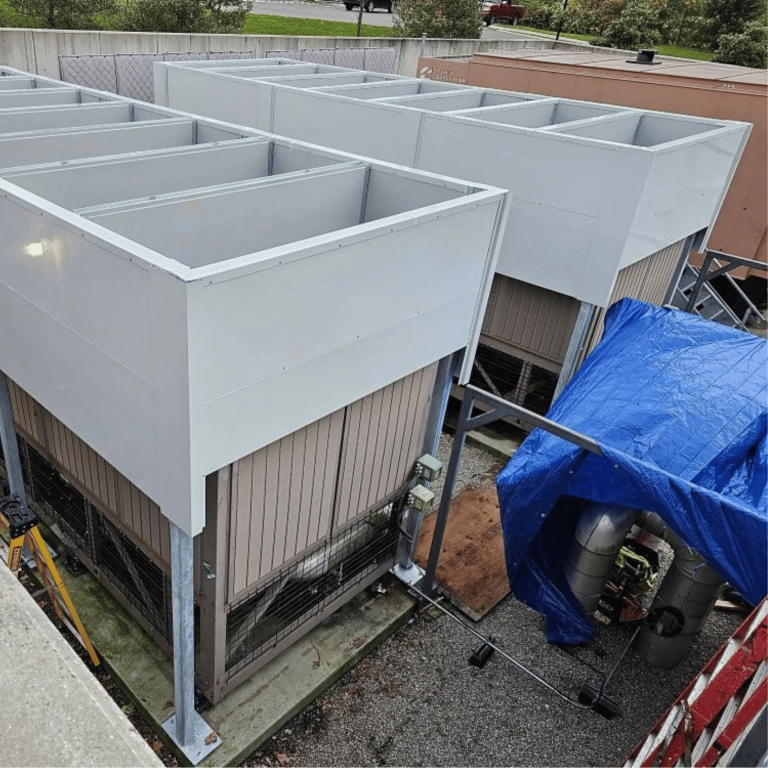
Rooftop chillers, condensers, cooling towers, fans, air-conditioning equipment and other mechanical systems can create environmental noise issues where residential, hospitality, healthcare, educational or commercial properties are located nearby.
NOISEBLOCK™ can be installed around or adjacent to rooftop equipment to interrupt the sound path toward sensitive receivers.
The barrier design should maintain the clearances and airflow required by the equipment manufacturer while also providing maintenance access.
Where the mechanical equipment requires significant airflow through the acoustic screen, KINETICS® acoustic louvers can be incorporated into the noise-control strategy.
For applications requiring a lightweight alternative, see NOISEBLOCK™ PW275 Lightweight Noise Barrier Walls.
For appropriate non-penetrating rooftop applications, see the KINETICS® QuickWall rooftop noise barrier.
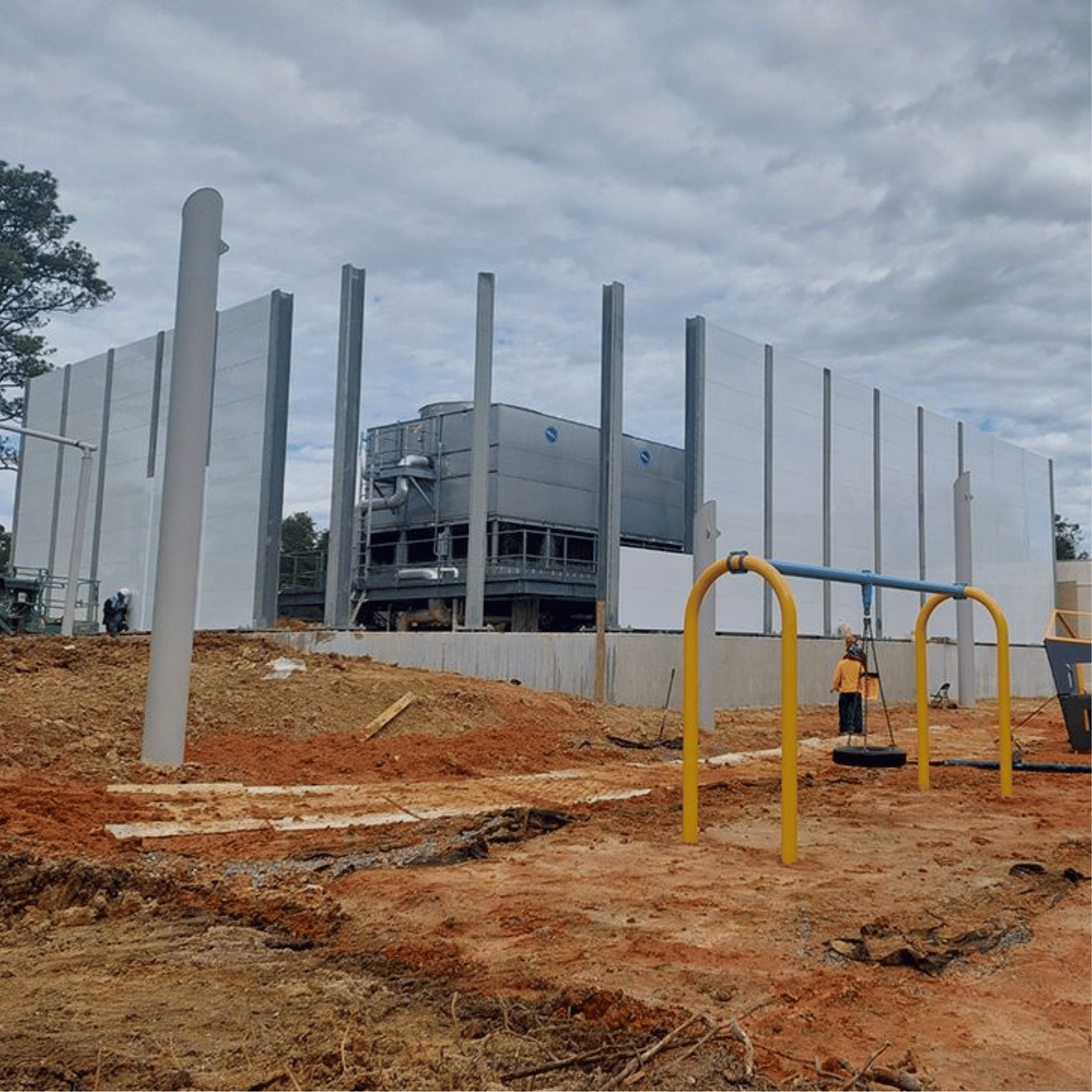
Air-cooled chillers, condensers and cooling towers can generate fan, compressor, motor and airflow noise that propagates beyond the mechanical area.
NOISEBLOCK™ acoustic barrier walls can be engineered to limit direct noise transmission toward nearby properties while coordinating the airflow and service clearances required by the equipment.
Where upward fan discharge is a major acoustic path, barrier walls may form part of a wider solution incorporating KINETICS® chiller noise control systems.
The correct treatment should be determined from equipment octave-band sound data and the required noise criterion at the affected receiver.
Standby and prime-power generators can generate significant airborne noise from the engine, cooling system and associated ventilation equipment.
A NOISEBLOCK™ barrier can interrupt direct generator noise propagation where a complete enclosure is not required or where an open barrier arrangement is preferred.
Generator noise-control design must also account for combustion air, radiator airflow, exhaust noise, maintenance access and equipment clearances.
Where greater containment is required, KINETICS® acoustic enclosures can be considered as part of the overall design.
Transformers and electrical equipment can create continuous tonal noise that affects nearby occupied buildings or property boundaries.
NOISEBLOCK™ barrier walls can provide both acoustic screening and visual screening around utility installations.
The system layout should be coordinated with electrical safety clearances, access, ventilation, structural loading and the applicable project acoustic criterion.
NOISEBLOCK™ systems can be used for compressors, process machinery, utility equipment, loading areas and other stationary industrial noise sources.
Typical industrial applications include:
Kinetics Group provides wider noise and vibration control solutions for HVAC, industrial, commercial and infrastructure projects across the UAE and MENA.
Outdoor acoustic barrier systems must satisfy structural as well as acoustic requirements.
The design should address:
NOISEBLOCK™ systems can be supplied with structural engineering information, equipment-layout coordination and installation drawings.
For UAE and GCC rooftop projects, structural design should be coordinated with the responsible project structural engineer and the applicable project codes and authority requirements.
Published NOISEBLOCK™ standard panel widths are approximately:
Standard panel lengths are available up to approximately:
Other dimensions can be produced for project-specific requirements.
The barrier arrangement can combine standard and custom panel sizes to coordinate with structural columns, equipment layouts, service penetrations and architectural conditions.
Finish options can include galvanized construction, factory-applied coatings and selected RAL colours according to project requirements.
Unlike a simple reflective visual screen, NOISEBLOCK™ combines acoustic absorption with sound blocking.
KINETICS® published comparison data identifies NOISEBLOCK™ as an absorptive/blocking barrier with STC 43 and NRC 1.0, while conventional concrete and standard metal vision screens are primarily reflective surfaces.
This distinction is important around mechanical equipment because sound striking a completely reflective barrier can be redirected toward other surfaces or receiver locations.
The appropriate solution must still be selected according to the complete acoustic geometry and project requirements.
NOISEBLOCK™ uses modular panel-and-post construction to support efficient transportation, site assembly and future system modifications.
Factory-prepared structural components and modular acoustic panels can reduce site fabrication and simplify coordination around equipment.
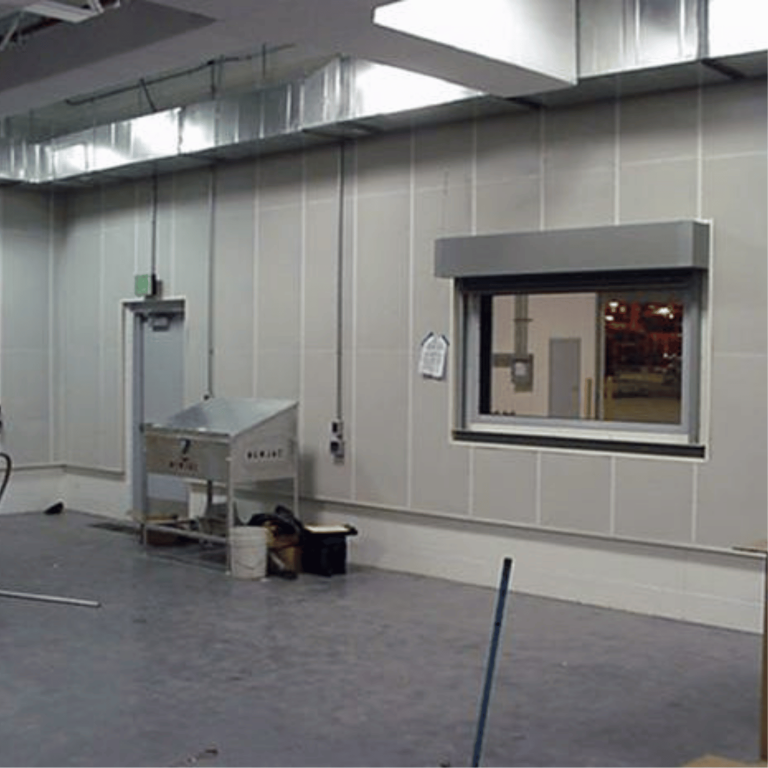
Electrical, piping and duct penetrations can be accommodated where properly detailed and acoustically sealed.
Installation must follow the latest approved KINETICS® drawings, project structural details and acoustic requirements.
Particular attention should be given to:
Uncontrolled openings can create significant flanking paths and reduce the acoustic benefit of the barrier.
Kinetics Group provides project-specific acoustic barrier engineering for challenging UAE mechanical-equipment noise applications.
In a documented Dubai residential project, Kinetics Acoustics Technical Services designed and installed an APMP-B acoustic barrier system to control rooftop chiller noise affecting upper-floor residences.
The project required acoustic performance, outdoor durability, structural coordination and rapid installation under existing rooftop constraints. Following installation, the documented noise level was reduced to below 55 dBA.
The Dubai project used the Kinetics APMP-B system rather than NOISEBLOCK™, but it demonstrates Kinetics Group’s regional capability in acoustic barrier assessment, engineering, fabrication coordination and installation for rooftop mechanical-noise problems.
For an engineered noise barrier selection, provide:
Providing octave-band equipment data is preferable to supplying only a single overall dBA value because barrier performance and equipment noise content vary with frequency.
KINETICS® NOISEBLOCK™ provides an engineered combination of sound blocking, sound absorption, modular construction and structural coordination for demanding mechanical and industrial applications.
Key published characteristics include:
Kinetics Group supports acoustic consultants, MEP consultants, HVAC engineers, contractors, developers, industrial operators and facility managers with engineered noise and vibration control solutions across Dubai, Abu Dhabi, the wider UAE, GCC, Middle East and MENA region.
A noise barrier wall is an acoustic structure installed between a noise source and a receiver. It interrupts the direct sound path and creates a sound-shadow zone behind the barrier. Performance depends on the wall’s acoustic properties, height, length, location and relationship to the source and receiver.
KINETICS® publishes NOISEBLOCK™ panel configurations with STC ratings from 40 to 43 and an NRC rating of 1.0.
STC describes the laboratory sound-transmission performance of a partition or panel over a defined frequency range. STC 43 does not mean every installed NOISEBLOCK™ barrier will reduce environmental noise by 43 dB. Actual site performance depends on barrier geometry, diffraction, openings, flanking paths and the source sound spectrum.
NRC describes sound absorption over a defined set of frequencies. NOISEBLOCK™ has a published NRC of 1.0, indicating a highly absorptive acoustic surface that helps reduce reflected sound energy.
Yes. Rooftop mechanical equipment is a primary NOISEBLOCK™ application. The barrier can be engineered around chillers, condensers, cooling towers, fans and other HVAC equipment while maintaining appropriate service and ventilation clearances.
Yes. A properly designed noise barrier can interrupt direct sound propagation from a chiller toward sensitive receivers. Chiller fan airflow, compressor noise, barrier height, receiver location and equipment clearance must all be considered during design.
Yes. NOISEBLOCK™ can form part of an acoustic treatment for cooling towers. The design must protect required intake and discharge airflow and avoid creating excessive aerodynamic restrictions.
Yes. Acoustic barriers can reduce direct airborne generator noise where the source-to-receiver geometry is suitable. Generator ventilation, radiator airflow, combustion air and exhaust noise must be evaluated separately.
Yes. KINETICS® acoustic louvers can be incorporated where airflow must pass through an acoustic barrier without leaving a completely untreated opening.
A noise barrier interrupts the direct sound path without completely surrounding the equipment. An acoustic enclosure surrounds substantially more of the noise source and generally provides greater containment. The appropriate system depends on the required noise reduction, ventilation, maintenance access and site constraints.
NOISEBLOCK™ is designed for outdoor applications and is available in galvanized steel, aluminium and stainless-steel material options. The final construction, protective finish and structural design should be selected specifically for the project’s environmental exposure, including rooftop, coastal or industrial conditions.
Provide equipment drawings, octave-band sound data, sensitive receiver locations, required noise criteria, proposed barrier location, structural details, equipment clearances, airflow requirements, material requirements and project drawings.
For a project-specific NOISEBLOCK™ acoustic barrier proposal, submit the equipment sound data, project layout, receiver locations, required noise criterion, structural information and ventilation requirements to Kinetics Group.
Kinetics can coordinate the noise barrier with acoustic louvers, acoustic enclosures, HVAC silencers, vibration isolation and other noise-control systems to develop an integrated solution for UAE, GCC and MENA projects.
RESOURCES
SOLUTIONS
NOISEBLOCK™ uses modular panel-and-post construction to support efficient transportation, site assembly and future system modifications.
Factory-prepared structural components and modular acoustic panels can reduce site fabrication and simplify coordination around equipment.
Electrical, piping and duct penetrations can be accommodated where properly detailed and acoustically sealed.
Installation must follow the latest approved KINETICS® drawings, project structural details and acoustic requirements.
Particular attention should be given to:
Uncontrolled openings can create significant flanking paths and reduce the acoustic benefit of the barrier.