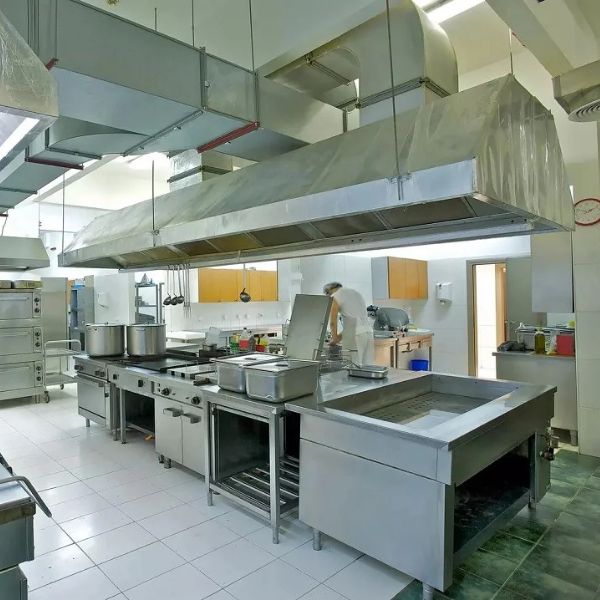
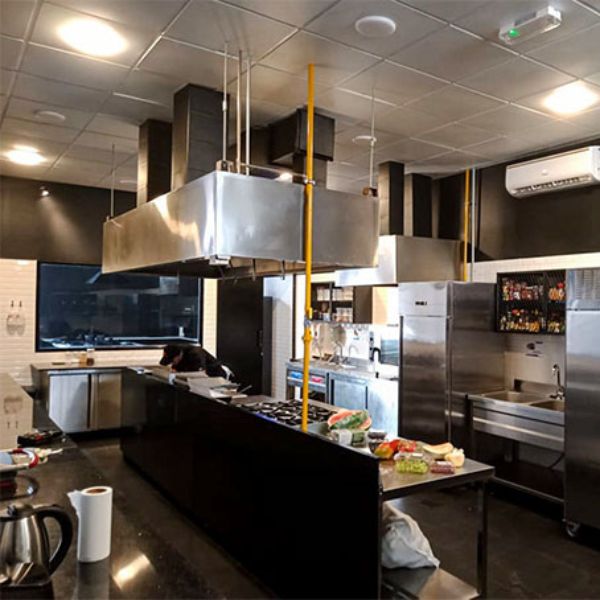
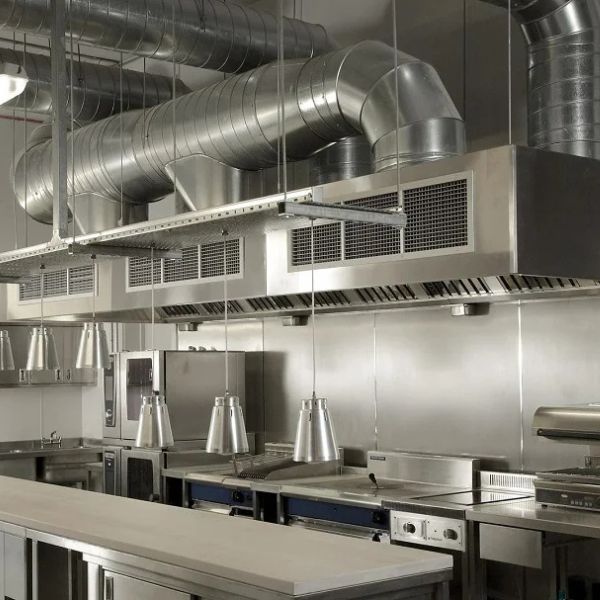
The Commercial Kitchen Exhaust System, also known as a Kitchen Ventilation System, manages the demanding air quality conditions found in professional cooking environments. Commercial kitchens generate heat, steam, smoke, odors, grease-laden air, and airborne cooking byproducts. Without proper ventilation, these contaminants can affect worker comfort, hygiene, equipment performance, and overall kitchen safety.
Engineered Exhaust for Professional Kitchens
A well-designed kitchen exhaust system captures contaminated air close to the cooking source and removes it through a coordinated ventilation network. The system supports cleaner air, reduces heat buildup, and helps control grease and odor within the kitchen environment.
Kinetics Group provides commercial kitchen exhaust and kitchen ventilation system solutions for restaurants, hotels, cafeterias, cloud kitchens, food courts, central kitchens, catering facilities, food production plants, and commercial building MEP projects across the UAE, GCC, Middle East, and MENA region.
Kitchen Hoods with Grease Control
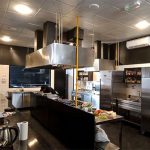
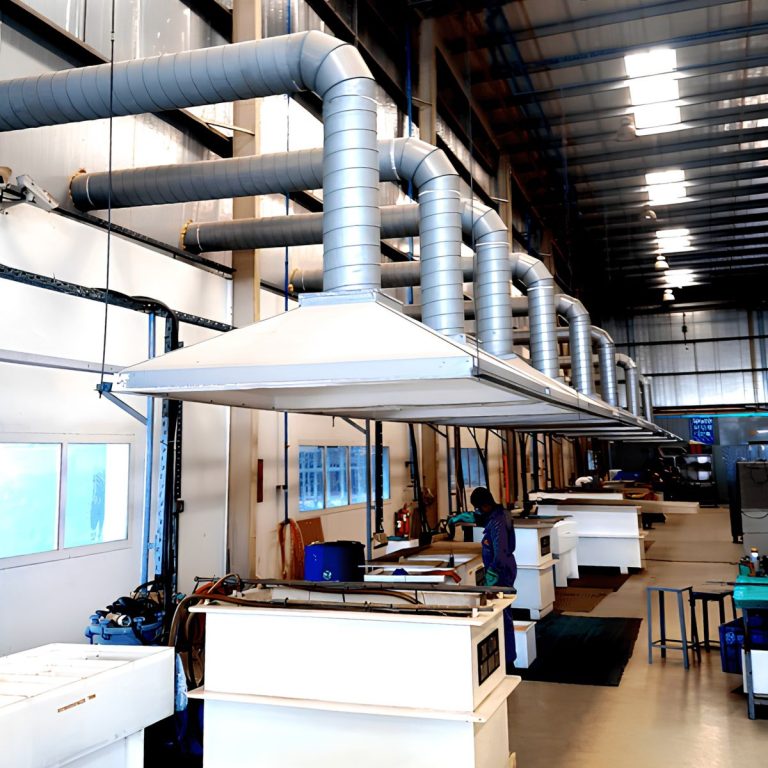
Kitchen hoods form the first point of capture in the exhaust system. They collect heat, steam, smoke, grease particles, and cooking fumes before these contaminants spread across the kitchen.
Stainless-steel kitchen hoods provide durability, hygiene, and a clean professional appearance. They can also include oil filters and oil cups to help capture grease and cooking byproducts. This supports easier maintenance and helps reduce grease accumulation within the exhaust path.
Ducting System with Maintenance Access
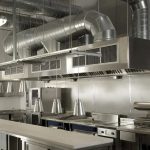
The ducting system transports contaminated air away from the cooking area. Properly designed ductwork supports airflow efficiency, system safety, and long-term maintainability.
Service doors can be included in the ducting system to allow inspection and cleaning. This access is important because kitchen exhaust ducts can collect grease over time. Regular inspection and cleaning help maintain ventilation performance and support safer kitchen operation.
Ecology Units for Exhaust Air Treatment
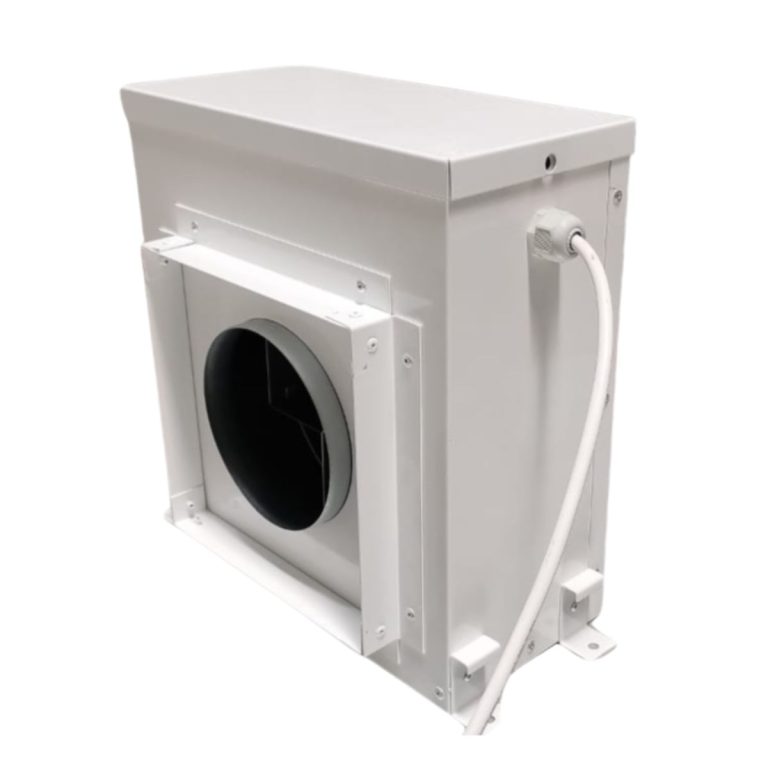
Commercial kitchen ventilation systems can include ecology units for enhanced exhaust air treatment. These units may use two-stage filtration with Electrostatic Precipitators, also known as ESP units, and carbon filter sections.
The ESP stage helps remove airborne grease and contaminants from the exhaust air. Meanwhile, carbon filtration supports odor reduction before the air is discharged. This combination helps improve exhaust air quality and supports environmental responsibility in dense commercial and urban areas.
Custom Blower and Fan Options
Every kitchen has different airflow needs. Cooking load, hood size, duct route, kitchen layout, discharge location, and site conditions all influence system design.
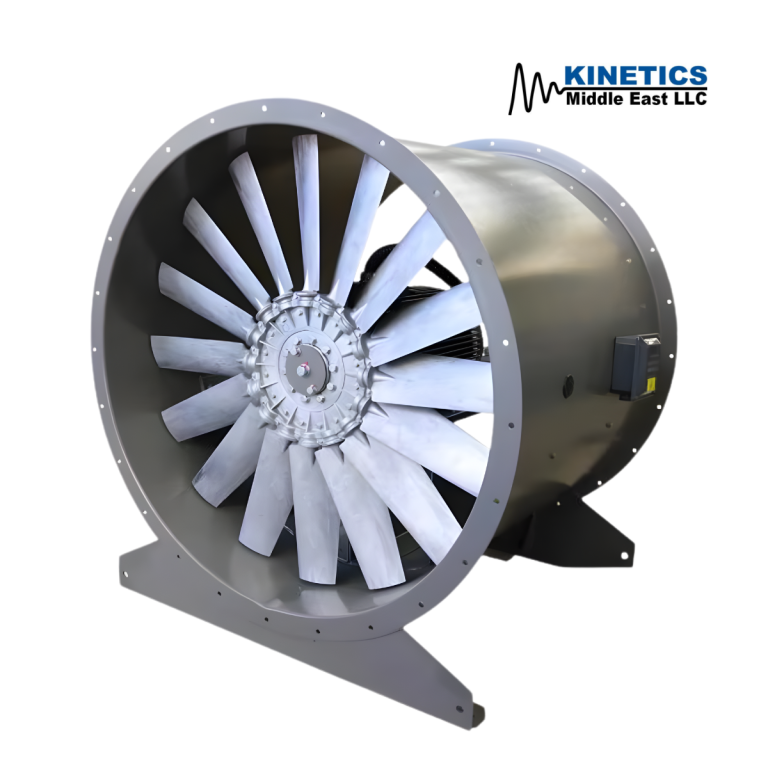
Custom blower options help maintain the required air movement through the exhaust system. Depending on the project, kitchen exhaust fans, centrifugal blowers, axial blowers, or other suitable air movement equipment can support reliable extraction and balanced airflow.
Fresh Air System for Pressure Balance
A commercial kitchen exhaust system removes a large volume of air. If the removed air does not get replaced properly, the kitchen can develop excessive negative pressure. This condition may reduce hood efficiency, cause discomfort for staff, and increase the risk of exhaust air disturbance within the cooking area.
A fresh air system introduces controlled outdoor air into the kitchen to balance the exhausted air. It may use centrifugal or axial blowers to supply fresh air at strategic points. As a result, the kitchen maintains steadier airflow, better comfort, and more effective exhaust performance.
FAQ
What is a commercial kitchen exhaust system?
A commercial kitchen exhaust system captures heat, smoke, steam, grease-laden vapour and cooking odours at source. It normally includes an exhaust hood, grease filters, ductwork, an exhaust fan, replacement air and the required controls or pollution-treatment equipment.
What is the difference between Type I and Type II kitchen hoods?
A Type I hood is used for cooking equipment that produces grease or smoke. A Type II hood is generally used for suitable appliances that generate heat, steam, condensation or odours without producing grease-laden vapour. The cooking-equipment schedule must be reviewed before selecting the hood.
How is commercial kitchen exhaust airflow calculated?
Exhaust airflow depends on the cooking-appliance duty, hood type, hood dimensions, mounting arrangement, appliance position, overhang, cross-drafts and applicable design requirements. The airflow should be calculated for the complete cooking line rather than selected only from the hood length.
Why does a commercial kitchen require make-up air?
The exhaust system removes a large volume of air from the kitchen. Controlled replacement air is needed to support hood capture, maintain the required building pressure and avoid excessive drafts, difficult door operation and uncontrolled air infiltration.
What is a kitchen ecology unit?
A kitchen ecology unit is an exhaust-air treatment system used to reduce grease, smoke, particulate matter and odours before the air is discharged. Available treatment stages can include mechanical filtration, electrostatic precipitation, activated carbon and other project-specific technologies.
Can a kitchen exhaust system eliminate all cooking odours?
No single treatment method removes every cooking odour under all conditions. Odour-control performance depends on the cooking process, exhaust volume, contaminant concentration, filtration stages, contact time, maintenance condition and discharge location.
How can commercial kitchen exhaust noise be reduced?
Noise can be controlled through correct fan selection, lower operating speed, vibration isolators, flexible connections, duct silencers, acoustic louvers and suitable discharge positioning. The acoustic solution should be selected from the fan sound data and the project noise criteria.
What information does Kinetics need to select a kitchen ventilation system?
Kinetics normally requires the cooking-equipment schedule, kitchen layout, appliance fuel and duty, hood dimensions, operating hours, exhaust route, make-up-air arrangement, odour criteria, fire-protection requirements and the applicable project drawings.