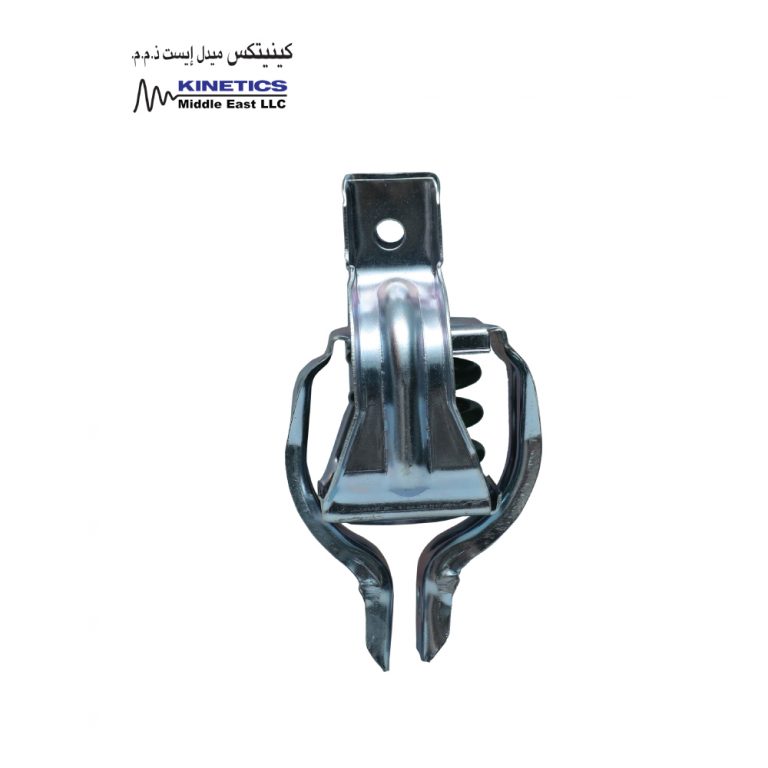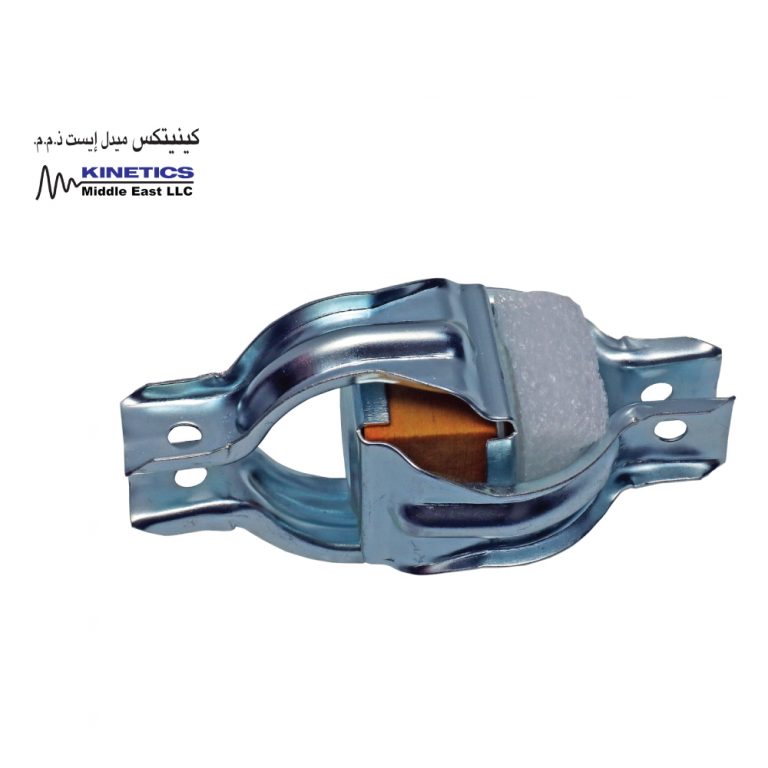
KSCH Low-Profile Spring Ceiling Hanger

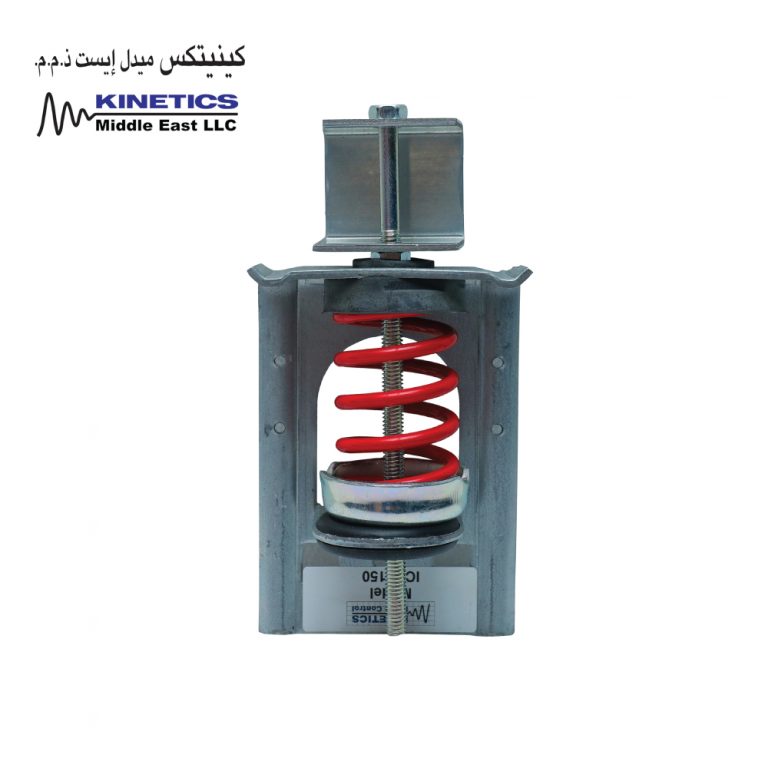
KINETICS® KSCH is a low-profile spring ceiling isolation hanger engineered to resiliently suspend gypsum board ceilings below concrete decks and compatible structural substrates while minimising loss of room height. Its full-deflection coil spring and resilient elastomeric interface provide effective airborne, impact and low-frequency noise isolation in a highly compact ceiling assembly.

Available in multiple load capacities and adaptable configurations, KSCH can accommodate varying deck elevations, extended ceiling drops and coordinated MEP requirements. Kinetics Group supplies and supports KSCH acoustic ceiling isolation systems throughout the UAE, GCC, Middle East and MENA region.

Product Details

Engineered for Performance.

Product Description

KINETICS® KSCH is a low-profile acoustic spring ceiling hanger for resiliently suspending gypsum board ceilings below concrete or compatible structural decks. The hanger provides approximately 1 inch of rated spring deflection, supports loads from 22 to 223 lb depending on model, and allows high-performance ceiling isolation within a compact ceiling void. Kinetics Group provides KSCH ceiling isolation systems for projects across the UAE, GCC and MENA region.

KSCH Low-Profile Spring Ceiling Hanger

KINETICS® KSCH is a high-performance low-profile spring ceiling hanger engineered for acoustic isolation of suspended gypsum board ceilings where available floor-to-ceiling height is limited.

The KSCH system resiliently separates the finished ceiling from the structural deck using a full-deflection coil spring combined with a resilient elastomeric spring cup. This isolation helps reduce the transmission of airborne sound, impact-generated vibration and low-frequency structure-borne noise through the floor-ceiling assembly.

Unlike conventional deep spring hanger arrangements, KSCH integrates the spring and cold-rolled carrying channel into an exceptionally compact configuration. This makes it particularly suitable for architectural and acoustic projects where high-performance ceiling isolation is required without sacrificing unnecessary room height.

Kinetics Group supplies KINETICS® KSCH ceiling isolation systems for acoustic consultants, architects, developers, main contractors, fit-out contractors and specialist acoustic projects throughout Dubai, Abu Dhabi, the UAE, GCC, Middle East and MENA region.

Low-Profile Acoustic Ceiling Isolation

Ceiling height is frequently one of the major constraints when designing an isolated acoustic ceiling.

Traditional isolation arrangements can require a substantial ceiling void below the structural deck. KSCH was specifically developed to provide spring isolation within a much shallower construction.

The hanger allows the 1-1/2-inch × 1/2-inch cold-rolled carrying channel to pass through the hanger assembly rather than being suspended below a conventional spring hanger.

This space-saving arrangement allows the acoustic ceiling to remain close to the structural deck while preserving the resilient separation required for noise and vibration control.

Published KINETICS® configurations demonstrate isolated ceiling constructions with approximately 3-3/8 to 4 inches of airspace, depending on the exact hanger configuration, framing and spring operating condition.

1-Inch Spring Deflection

KINETICS® KSCH is available with coil springs designed for approximately 1 inch / 25 mm rated deflection.

High spring deflection is particularly important where the isolated ceiling must provide effective attenuation of lower-frequency structural vibration and sound.

The spring assembly is combined with a resilient elastomeric cup that provides an additional resilient interface between the spring and hanger structure.

This spring-and-elastomer arrangement helps reduce vibration transmission across a broad frequency range while retaining the compact geometry required for low-profile ceiling construction.

The correct spring capacity must be selected according to the actual calculated load carried by each hanger.

KSCH Load Capacities

KINETICS® provides multiple KSCH spring capacities so individual hangers can be selected according to the load distribution across the isolated ceiling.

Available rated capacities include:

KSCH Model Rated Load
KSCH-22 22 lb / 10 kg
KSCH-35 35 lb / 15.9 kg
KSCH-48 48 lb / 21.8 kg
KSCH-73 73 lb / 33.1 kg
KSCH-90 90 lb / 40.8 kg
KSCH-120 120 lb / 54.4 kg
KSCH-140 140 lb / 63.5 kg
KSCH-172 172 lb / 78 kg
KSCH-223 223 lb / 101.2 kg

At rated load, these spring selections provide approximately 1 inch of total design deflection.

Spring selection should be based on the calculated load at each hanger location rather than selecting one hanger capacity for the entire room.

The calculation should include all elements supported by the isolated ceiling system, including:

  • Gypsum board
  • Cold-rolled channel
  • Drywall furring channel
  • Acoustic insulation
  • Lighting supported by the isolated grid
  • Architectural ceiling elements
  • Other approved point or distributed loads

Where mechanical or MEP equipment is to be supported from the isolated ceiling system, its location and weight must be coordinated during the hanger design.

Low-Frequency Sound and Vibration Control

Low-frequency noise is one of the most difficult acoustic problems to control in buildings.

Mechanical equipment, entertainment systems, impact activity and structural vibration can excite slabs and building framing, allowing sound energy to travel into adjoining spaces.

A rigidly suspended ceiling can become part of this transmission path.

KSCH introduces resilient spring isolation between the structural deck and finished gypsum board ceiling, reducing the mechanical coupling between these two masses.

The resulting isolated floor-ceiling assembly can provide substantially greater acoustic separation than a ceiling that is rigidly attached to the structural slab.

Acoustic Performance – Tested STC and IIC Assemblies

KINETICS® KSCH has been incorporated into independent laboratory-tested floor-ceiling constructions.

One published assembly consisted of:

  • 6-inch concrete slab
  • KINETICS® KSCH spring ceiling hangers
  • Cold-rolled carrying channel
  • Drywall furring channel
  • 1-1/2-inch fiberglass insulation
  • Approximately 3-3/8-inch ceiling airspace
  • Two layers of 5/8-inch gypsum board

The complete assembly achieved:

STC 69 – Sound Transmission Class

IIC 54 – Impact Insulation Class

A further tested construction combining KSCH with a resilient floor treatment achieved:

STC 69

IIC 62

These acoustic ratings apply to the complete tested assemblies and must not be interpreted as standalone performance ratings for the KSCH hanger.

Actual project performance depends on the entire floor-ceiling system, including slab construction, ceiling mass, cavity depth, insulation, floor finishes, perimeter isolation, penetrations, flanking paths and installation workmanship.

KSCH-APB for Increased Ceiling Airspace

Where greater acoustic performance or a deeper isolated ceiling is required, KSCH can be combined with the Airspace Performance Bracket – APB.

The APB allows the resilient ceiling to be suspended farther below the structural deck while retaining the KSCH spring isolation system.

Increasing the airspace between the structural slab and gypsum ceiling can improve the acoustic behaviour of the complete mass-air-mass assembly.

Published KINETICS® laboratory tests include an 8-inch airspace KSCH-APB assembly achieving STC 80 and IIC 64, while a separate 12-inch airspace assembly achieved STC 81 and IIC 60.

These values again represent complete tested constructions rather than the performance of the hanger alone.

The APB configuration is particularly useful where the project requires:

  • Greater acoustic performance
  • Variable ceiling elevations
  • Deep ceiling voids
  • Soffits
  • Architectural ceiling transitions
  • Coordination around mechanical services
  • Different structural deck levels

Adaptable Ceiling Configurations

One of the major advantages of KSCH is its ability to accommodate different isolated ceiling geometries using the same basic hanger concept.

Standard KSCH Configuration

The standard low-profile configuration is used where the isolated ceiling can remain close to the structural deck and the primary objective is to minimise ceiling drop.

KSCH with Threaded Rod Extension

A threaded rod can be added where additional distance is required between the hanger and ceiling grid.

This allows KSCH to accommodate variations in ceiling elevation while retaining the spring isolation function.

KSCH with APB

The Airspace Performance Bracket allows a specified deeper ceiling airspace while maintaining the KSCH isolation arrangement.

These configurations make KSCH suitable for projects containing varying soffits, stepped ceilings, different deck elevations and complex architectural ceiling conditions.

Concrete Deck and Structural Attachment

KSCH is primarily designed as a deck-suspended acoustic ceiling hanger.

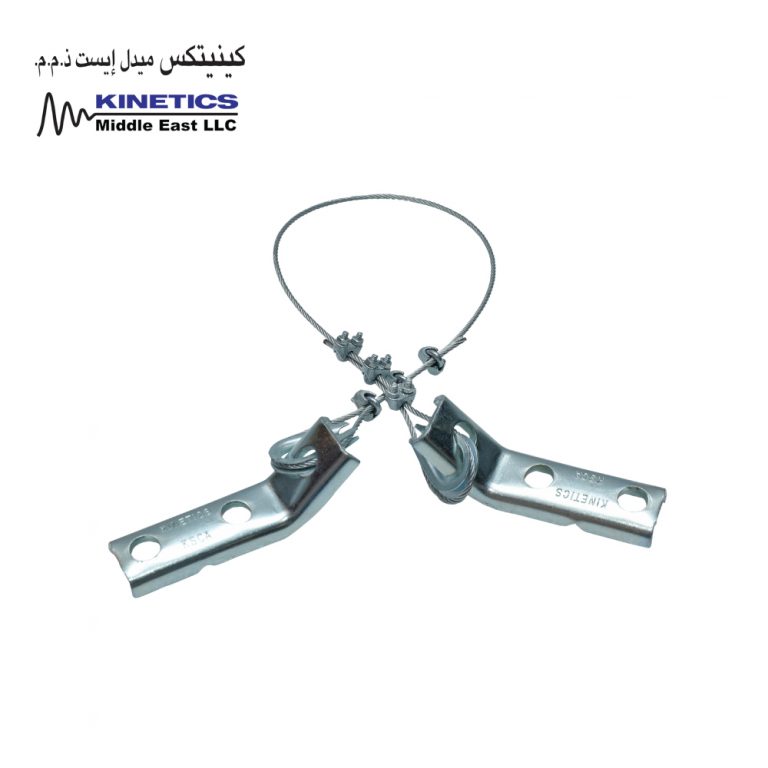
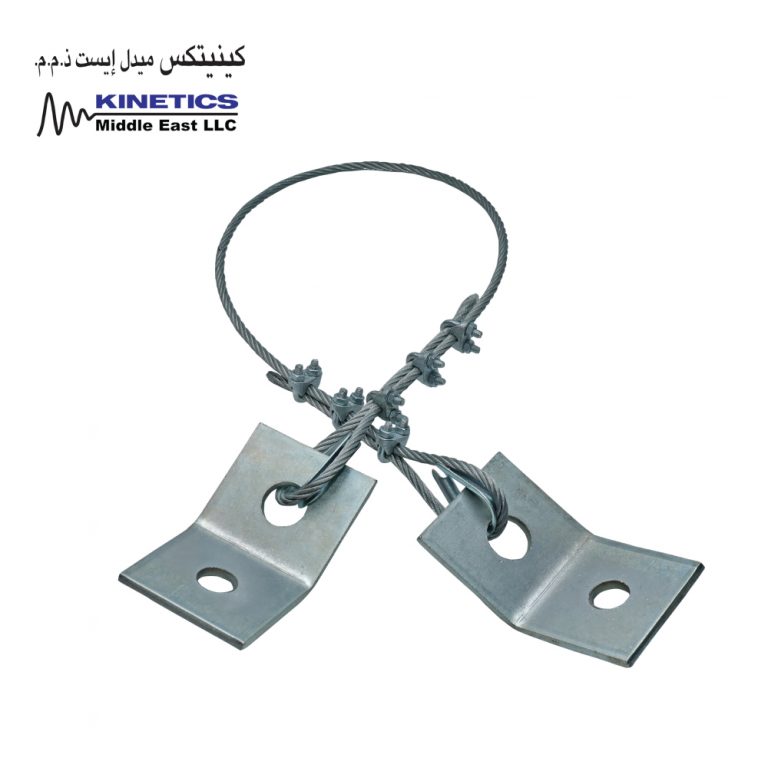
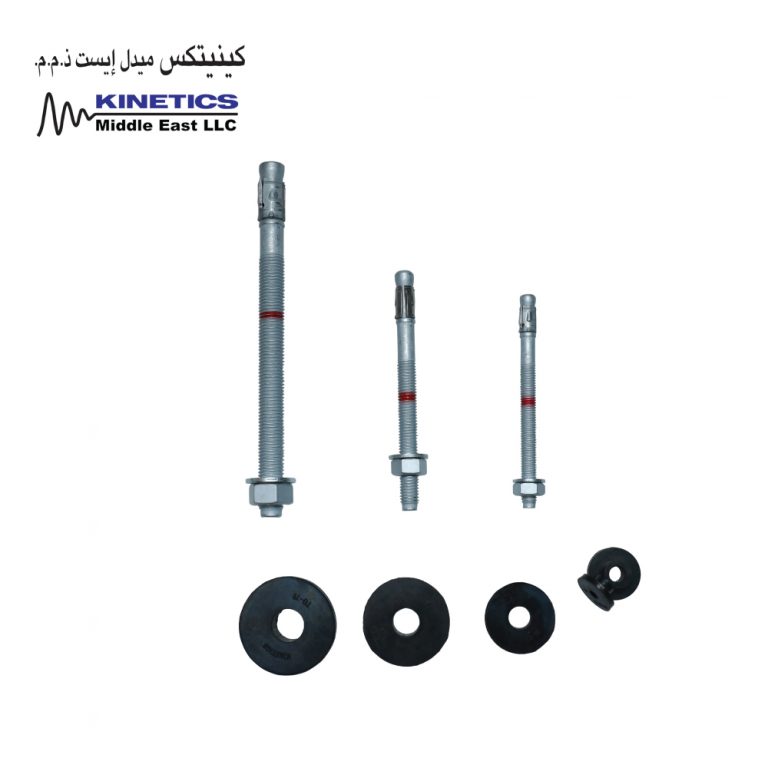
The mounting bracket can be attached directly to an appropriate structural deck using an approved fixing system.

Alternative configurations allow the hanger to engage with Unistrut® or compatible structural channel systems, providing additional flexibility where the ceiling must span between structural elements or coordinate around ducts and other building services.

A wider mounting plate configuration is also available for applications requiring an increased fixing area.

The final attachment method must be selected according to:

  • Structural deck type
  • Hanger load
  • Anchor capacity
  • Seismic requirements
  • Structural design
  • Applicable project specifications

Integrated Cold-Rolled Channel Support

KSCH is designed around a single 1-1/2-inch × 1/2-inch cold-rolled carrying channel.

The carrying channel passes through the hanger’s channel carrier and supports the drywall furring channel below.

This eliminates the vertical build-up associated with many conventional hanger and grid combinations.

The channel arrangement must remain completely isolated from the non-isolated building structure.

Cold-rolled channel and furring channel must not make rigid contact with surrounding:

  • Walls
  • Columns
  • Beams
  • Structural soffits
  • Service supports
  • Other non-isolated components

Any rigid bridge around the KSCH spring isolation can create an acoustic short circuit and reduce system performance.

Resilient Ceiling Perimeter

Correct perimeter isolation is essential to an effective KSCH ceiling system.

The isolated gypsum board ceiling and framing should remain resiliently separated from surrounding partitions, walls, columns and structural components.

KINETICS® CPT resilient ceiling perimeter tape can be incorporated at perimeter interfaces to maintain the required separation.

After completion of the ceiling, the perimeter joint can be treated with the specified acoustic sealant while ensuring that a rigid connection is not created.

Penetrations for mechanical, electrical, plumbing, fire protection and architectural services must also be detailed so that they do not bypass the isolation system.

MEP Integration with KSCH

Modern acoustic ceilings often need to coordinate with MEP services positioned within or below the isolated ceiling.

KSCH provides several configurations that allow this coordination to be incorporated into the design.

Threaded rod extensions can be used in approved configurations for attachment of selected components below the ceiling system.

Applications can include coordinated support for:

  • Ductwork
  • Cable trays
  • Lighting
  • Ceiling-mounted equipment
  • Architectural services
  • Other approved building-services components

The additional load must be included when calculating the required KSCH spring capacity.

For mechanical equipment or significant point loads, the exact equipment location and weight should be coordinated during the hanger layout and shop-drawing stage.

KSCH installation guidelines intended for conventional drywall ceilings should not automatically be applied to substantial MEP equipment loads without engineering review.

Seismic Capability

KINETICS® classifies KSCH within its ceiling isolation systems suitable for seismic design categories where the complete ceiling system is appropriately engineered.

The hanger’s compact geometry restricts excessive spring movement while maintaining resilient isolation during normal operation.

Where seismic restraint is required, the ceiling framing, hanger, perimeter conditions, attachments and associated services must be coordinated as a complete system.

Seismic requirements should be established from the approved project design rather than relying on the hanger alone.

KSCH vs ICC Ceiling Hangers

Both KSCH and ICC are KINETICS® spring ceiling isolation systems, but they address different project requirements.

KSCH is specifically designed to provide high spring deflection within a very compact ceiling construction. The cold-rolled carrying channel is integrated through the hanger assembly to minimise the required airspace.

ICC is a conventional deck-suspended full-deflection ceiling hanger that provides greater freedom where available ceiling depth is less restricted.

KSCH is therefore particularly appropriate where ceiling height is at a premium, while ICC may be selected where a conventional suspended spring hanger configuration is preferred.

The correct system should be selected according to:

  • Available ceiling void
  • Required spring deflection
  • Ceiling weight
  • Acoustic performance target
  • Structural substrate
  • MEP coordination requirements
  • Ceiling geometry
  • Seismic requirements
  • Acoustic consultant specification

KSCH vs IsoGrid Ceiling Hangers

KSCH and IsoGrid use fundamentally different isolation technologies.

KSCH uses a full-deflection coil spring system and is intended for projects requiring high-performance spring isolation, including improved low-frequency control.

IsoGrid uses a resilient neoprene isolation element and provides a compact quick-connect solution for projects where elastomeric isolation is appropriate.

Where the acoustic design requires approximately 1 inch of spring deflection or enhanced low-frequency isolation, KSCH is generally the applicable KINETICS® system.

Where a compact neoprene ceiling isolator is specified, IsoGrid may be the appropriate alternative.

KSCH for UAE, GCC and MENA Projects

Kinetics Group provides specialist noise control, vibration isolation, acoustic and engineered building-services solutions for construction projects throughout the UAE and wider regional market.

KINETICS® KSCH is particularly suited to projects requiring a high-performance isolated gypsum ceiling while preserving valuable finished room height.

Kinetics Group supports:

  • Acoustic consultants
  • Architects
  • MEP consultants
  • Main contractors
  • Fit-out contractors
  • Specialist acoustic contractors
  • Developers
  • Hotel and hospitality project teams
  • Cinema and entertainment projects
  • Residential developments

Project support can include hanger selection, ceiling loading coordination, technical submittals, acoustic documentation, shop-drawing requirements and project-specific ceiling isolation requirements throughout Dubai, Abu Dhabi, the UAE, GCC, Middle East and MENA region.

Frequently Asked Questions

What is a KSCH ceiling hanger?

KINETICS® KSCH is a low-profile spring ceiling isolation hanger designed to resiliently suspend gypsum board ceilings from structural decks while minimising the ceiling void required for the isolation system.

Is KSCH a spring hanger?

Yes. KSCH uses coil springs providing approximately 1 inch of rated deflection. It is a full-deflection spring ceiling isolation system.

What is the spring deflection of KSCH?

Current KINETICS® KSCH submittal data lists approximately 1 inch / 25 mm of rated total spring deflection for the standard KSCH-22 through KSCH-223 models.

What load capacities are available?

KSCH models are available with rated capacities from 22 lb to 223 lb per hanger.

How much ceiling space does KSCH require?

KSCH is specifically designed for low-profile construction. Published configurations demonstrate isolated ceiling assemblies using approximately 3-1/2 to 4 inches of ceiling airspace, depending on configuration, framing and operating condition.

Can KSCH be attached to concrete?

Yes. KSCH is primarily intended as a deck-suspended ceiling isolation hanger and can be attached to suitable concrete or compatible structural substrates using approved fixing methods.

Can KSCH attach to Unistrut®?

Yes. KINETICS® provides KSCH configurations designed to slide into compatible Unistrut® channel, which can assist with ceiling support and coordination around building services.

What is the acoustic performance of KSCH?

A published laboratory-tested assembly incorporating a 6-inch concrete slab, KSCH hangers, insulation, cold-rolled channel and two layers of 5/8-inch gypsum board achieved STC 69 and IIC 54.

Acoustic ratings apply to the complete tested construction rather than to the hanger alone.

What is KSCH-APB?

APB means Airspace Performance Bracket. It allows the KSCH isolated ceiling to be positioned farther below the deck, increasing the ceiling airspace and providing additional configuration flexibility and potential acoustic performance.

Does increasing the ceiling airspace improve sound isolation?

Increasing the distance between the structural slab and isolated gypsum ceiling can improve the performance of the complete mass-air-mass construction when the full assembly is correctly designed.

Published KSCH-APB tests include assemblies achieving STC 80/IIC 64 and STC 81/IIC 60 with increased airspaces.

Can KSCH support MEP equipment?

KSCH can be configured to coordinate approved loads and selected building-services components, but their weight and exact location must be included in the hanger design. Significant mechanical or MEP loads require project-specific engineering coordination.

What is the difference between KSCH and ICC?

Both are full-deflection spring ceiling isolation hangers. KSCH is specifically optimized for low-profile construction, while ICC uses a more conventional deck-suspended hanger arrangement.

What is the difference between KSCH and IsoGrid?

KSCH uses coil-spring isolation with approximately 1 inch of deflection. IsoGrid uses a neoprene isolation element with substantially lower static deflection. KSCH is therefore aimed at higher-performance spring isolation and low-frequency control.

Where is KSCH available in the UAE?

Kinetics Group supplies and provides technical support for KINETICS® KSCH acoustic spring ceiling isolation systems for projects throughout Dubai, Abu Dhabi, the wider UAE, GCC, Middle East and MENA region.

Specify KINETICS® KSCH Low-Profile Spring Ceiling Hangers

Specify KINETICS® KSCH Low-Profile Spring Ceiling Hangers for suspended gypsum board ceiling systems requiring approximately 1-inch spring isolation while minimising loss of finished room height.

Select individual KSCH spring capacities according to the calculated ceiling load at each hanger position and coordinate structural attachment, ceiling airspace, perimeter isolation, MEP loads and acoustic performance requirements with the approved project design.

For KSCH model selection, hanger layouts, acoustic ceiling isolation requirements, technical submittals and consultant specifications, contact Kinetics Group for engineering and commercial support across the UAE, GCC and MENA region.

Technical Product Information

KINETICS® KSCH is a patented low-profile spring ceiling isolation system manufactured by Kinetics Noise Control. Manufacturer resources include project selection guidelines, installation instructions, BIM data, technical drawings and independently tested acoustic assemblies. Published STC and IIC ratings apply to specific complete laboratory-tested floor-ceiling constructions and not to the hanger alone. Kinetics Group provides KSCH product selection and technical coordination for consultant-specified projects across the UAE, GCC and MENA region.

Application

KINETICS® KSCH low-profile spring ceiling hangers are suitable for acoustic ceiling isolation in projects where both high-performance sound isolation and limited ceiling void depth are important.

Typical applications include:

  • Hotels and resorts
  • Luxury residences
  • Apartments and residential towers
  • Offices and executive spaces
  • Boardrooms and meeting rooms
  • Cinemas and screening rooms
  • Home theatres
  • Recording studios
  • Broadcasting facilities
  • Music and rehearsal spaces
  • Auditoriums
  • Performing arts facilities
  • Educational facilities
  • Healthcare buildings
  • Mechanical equipment areas
  • Commercial fit-out projects
  • Refurbishment projects
  • Mixed-use developments
  • Noise-sensitive rooms below mechanical spaces

Features & Benefits

KINETICS® KSCH provides:

  • Low-profile acoustic ceiling isolation
  • Approximately 1-inch / 25 mm rated spring deflection
  • Coil spring with resilient elastomeric interface
  • Effective low-frequency noise and vibration isolation
  • Rated hanger capacities from 22 to 223 lb
  • Multiple spring selections for accurate load matching
  • Compact integration of cold-rolled carrying channel
  • Reduced ceiling-space requirement
  • Direct structural deck attachment capability
  • Unistrut® mounting capability
  • Threaded-rod extension configurations
  • Airspace Performance Bracket option
  • Adaptability to varying ceiling elevations
  • Suitable for architectural ceiling transitions and soffits
  • Compatible with multi-layer gypsum ceiling constructions
  • Laboratory-tested acoustic assemblies
  • Integration with resilient perimeter isolation
  • Configurations for coordinated MEP requirements
  • Project-specific hanger layouts and spring selections

Installation Guidelines

Available Downloads Options

Datasheet
PDF
Installation Guide
wpChatIcon
wpChatIcon

Send Us a Message