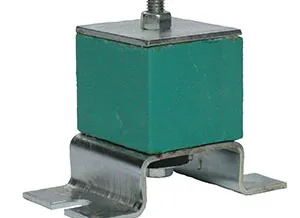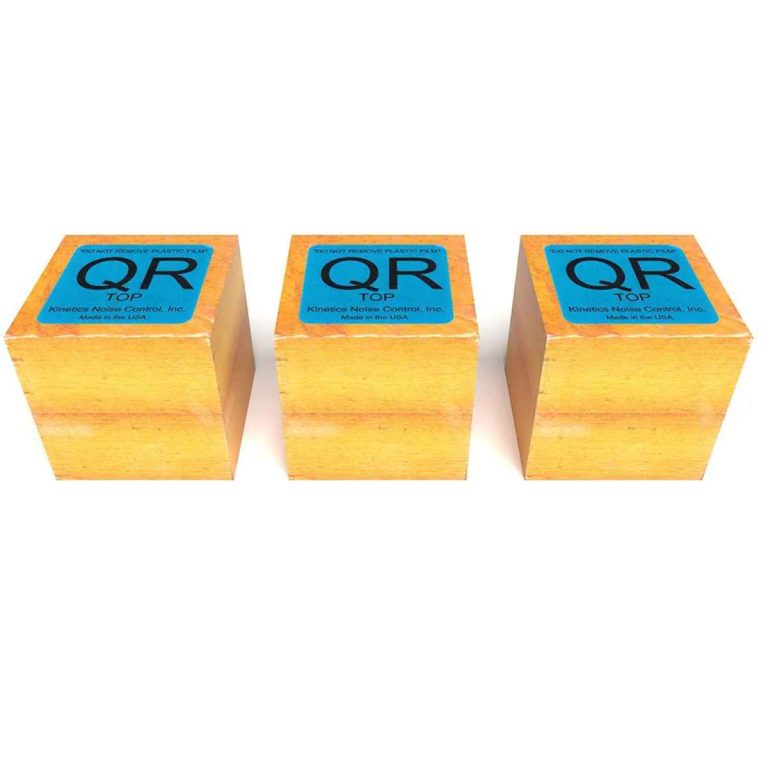
Kinetics Model AC is a bolt-down fiberglass vibration isolator for utility ventilating fans, vane axial fans, high-speed motors, roof-mounted exhaust fans and similar mechanical equipment. It combines a precompressed inorganic fiberglass isolation element with a steel load-transfer plate, formed hold-down bracket and neoprene-grommeted equipment anchor bolt. AC isolators provide capacities from 40 to 900 lb and rated static deflections from 0.18 to 0.70 in. Kinetics Group provides product selection, technical submittals and project support across the UAE, GCC, Middle East and MENA region.
Engineered for Performance.
Kinetics Model AC is a bolt-down fiberglass vibration isolator engineered to reduce audible-frequency vibration, structure-borne noise and mechanical equipment movement. The isolator is designed for utility ventilating fans, vane axial fans, high-speed motors, roof-mounted exhaust fans and similar floor-mounted HVAC or mechanical equipment.
Model AC combines the predictable dynamic response and permanent load-support characteristics of precompressed fiberglass with a steel load-transfer plate, formed bolt-down bracket and vertical lift-control feature. Kinetics Group provides AC isolator selection, technical documentation and project support for consultants, contractors and equipment suppliers across the UAE, GCC, Middle East and MENA region.
What Is an AC Fiberglass Vibration Isolator?
The AC is a floor-mounted vibration isolation product consisting of a molded inorganic fiberglass isolation element bonded to a steel load-transfer plate and a formed steel bolt-down bracket.
An equipment mounting bolt and neoprene grommet are incorporated to help prevent unintended metal-to-metal contact at the equipment attachment point. The complete fiberglass element is coated with a flexible, moisture-impervious elastomeric membrane.
The mount is selected where equipment must be securely bolted to its supporting structure while retaining resilient vibration isolation and vertical lift control.
How the AC Fiberglass Mount Controls Vibration
Rotating mechanical equipment can transmit vibration through its base and equipment supports into a slab, pier or adjoining building structure. Once transmitted into the structure, this mechanical energy may be experienced as vibration or radiated as audible noise in nearby occupied areas.
The precompressed fiberglass element introduces a resilient separation between the equipment and supporting structure. The fiberglass media provides controlled viscous damping, high energy dissipation and a predictable dynamic response.
Fiberglass isolation media is also characterised by an essentially constant natural frequency over a wide operating-load range. Its stiffness increases proportionately as the applied load increases, supporting stable performance across the approved operating range.
AC Fiberglass Isolator Applications
For mechanical equipment vibration isolation, AC mounts are intended for equipment with a lowest operating speed of 1750 RPM when the equipment is installed on a grade-supported slab or pier.
Published Capacity and Deflection Range
| Technical Property | Published AC Range |
|---|---|
| Load capacity | 40 to 900 lb |
| Approximate metric load capacity | 18 to 409 kg |
| Rated static deflection | 0.18 to 0.70 in. |
| Approximate metric deflection | 4 to 18 mm |
| Isolation media | Precompressed molded inorganic fiberglass |
| External coating | Flexible moisture-impervious elastomeric membrane |
| Equipment connection | Mounting bolt with neoprene isolation grommet |
| Structural connection | Formed steel bolt-down and hold-down bracket |
Selection notice: The published figures represent the overall AC product range. The correct model must be selected according to the operating load imposed at each individual support point and the static-deflection requirement stated in the project’s vibration-isolation schedule.
Manufacturer-Based Technical Data
The AC construction, application, capacity and deflection information published on this page is based on Kinetics Noise Control Model AC technical literature. Final isolator selection must be confirmed for the actual operating load at each equipment support point and the required static deflection shown in the approved project documents.
Kinetics Group provides regional product-selection, submittal and project support for consultants, contractors and equipment suppliers across the UAE and MENA region.
AC Fiberglass Mount Features and Benefits
Precompressed Fiberglass Isolation Media
The AC isolation element is manufactured from fine bonded glass fibers that are stabilised by precompression during manufacture. The fibers have a published maximum diameter of 0.00027 in. / 6.8 microns.
Precompression helps produce permanent load-support characteristics and a predictable dynamic response. The element is individually coated with a flexible elastomeric membrane that provides a moisture-impervious external surface.
Bolt-Down and Vertical Lift Control
Model AC is selected when fiberglass vibration isolation is required together with a positive equipment attachment and hold-down arrangement.
The fiberglass element is bonded between the steel load-transfer plate and formed steel bracket. The bracket can be anchored to the supporting structure, while the equipment mounting bolt connects the supported equipment through a neoprene grommet.
This configuration provides a practical solution for applications where equipment must be bolted to its support while avoiding a direct metal-to-metal connection through the isolation mount.
AC Isolator Selection Requirements
Do not select the AC model from the total equipment weight alone. The operating load at each individual support point must be calculated because equipment weight may not be distributed equally between the mounts.
Provide the following information for technical selection:
Final AC model selection must be completed or confirmed by the manufacturer or authorised Kinetics technical team for the specific application.
Selection and Installation Notes
The approved project submittal, equipment manufacturer’s requirements and structural anchoring details take precedence over general website guidance.
AC Fiberglass Isolator or KIP Fiberglass Pad?
Model AC and Model KIP use fiberglass isolation media but serve different support arrangements.
Model AC incorporates a steel load-transfer plate, formed bolt-down bracket, equipment anchor bolt and vertical lift-control feature. It is used when the supported equipment must be positively attached to the mounting structure.
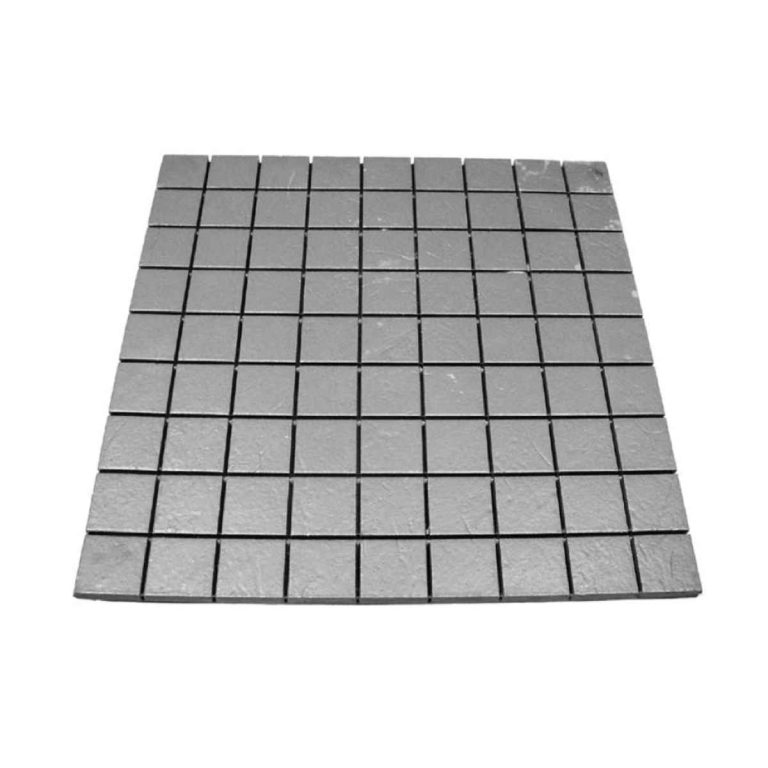
Model KIP is a fiberglass isolation pad available in different densities, thicknesses, sizes and support configurations. It is used beneath mechanical equipment, industrial machinery and within engineered floating-floor systems where the AC mount’s integral bolt-down bracket is not required.
Review the KIP Fiberglass Vibration Isolation Pads.
AC Fiberglass Mount or Neoprene Mount?
Fiberglass and neoprene isolators must not be treated as direct substitutes. Model AC is selected where the predictable dynamic response, controlled viscous damping and permanent load-support characteristics of fiberglass are required together with a bolt-down connection.
Neoprene mounts use molded elastomeric media with different load-deflection, damping and environmental characteristics.
For molded neoprene equipment isolation, review the RD and RDS Neoprene Vibration Isolation Mounts.
Technical Documentation
AC Fiberglass Isolator Support in the UAE and MENA
Kinetics Group supports HVAC contractors, MEP consultants, acoustic consultants, mechanical engineers, equipment suppliers, developers and procurement teams with AC isolator selection, technical submittals and project coordination.
Technical and commercial support is available for projects in Dubai, Abu Dhabi and throughout the UAE, as well as Saudi Arabia, Qatar, Oman, Kuwait, Bahrain, the wider Middle East, North Africa and MENA region.
Contact Kinetics Group for AC fiberglass vibration isolator selection and project enquiries.
Kinetics Model AC is a bolt-down fiberglass mount designed to reduce audible-frequency vibration and noise from floor-mounted mechanical equipment.
Typical applications include utility ventilating fans, vane axial fans, high-speed motors, roof-mounted exhaust fans and similar mechanical equipment.
The published AC range provides capacities from 40 to 900 lb, equivalent to approximately 18 to 409 kg.
AC fiberglass isolators provide published rated static deflections from 0.18 to 0.70 in., equivalent to approximately 4 to 18 mm.
For mechanical equipment vibration isolation, AC mounts can be applied to equipment with a lowest operating speed of 1750 RPM when mounted on a grade-supported slab or pier.
The equipment mounting bolt incorporates a neoprene grommet that resiliently separates the equipment connection from the steel mounting components.
The model is selected from the operating load at each support point, required static deflection, equipment speed, mounting arrangement and project vibration-isolation schedule.
Model AC includes an integral load-transfer plate, formed bolt-down bracket and equipment mounting connection. Model KIP is a fiberglass isolation pad used where an integral bolt-down bracket is not required.
Send Kinetics Group the equipment type, operating weight, support reactions, number of mounting points, operating speed, required static deflection and project location. Our technical team will assist with AC fiberglass isolator selection and submittal coordination for UAE, GCC and MENA projects.
AC Fiberglass Vibration Isolators must be selected according to the actual operating load imposed at each support point and the static-deflection requirement stated in the approved vibration-isolation schedule.
Final AC model selection, anchoring and installation must follow the approved project submittal, structural details and equipment manufacturer’s requirements.