

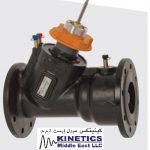

Hydronic balancing valves regulate water flow through HVAC heating and cooling circuits so each branch, coil or terminal unit receives its required design flow. Kinetics Group provides Pettinaroli hydronic balancing valve solutions for chilled water, heating water and district cooling systems across the UAE, GCC and MENA region, supporting MEP consultants and contractors with project-specific valve selection and technical coordination.
Kinetics Group provides Pettinaroli hydronic balancing valves in the UAE for chilled water, heating water, district cooling and building-services HVAC systems. These solutions support accurate water-flow distribution, reliable commissioning and effective hydronic control for commercial, residential, hospitality, healthcare, infrastructure and industrial developments.
Hydronic balancing valves regulate water flow through HVAC heating and cooling circuits so each branch, coil or terminal unit receives its required design flow. Correctly balanced systems help consultants and contractors achieve the intended hydraulic performance throughout the distribution network while supporting efficient HVAC operation.
Kinetics Group supports consultants, MEP contractors, procurement teams and project engineers requiring Pettinaroli balancing valves and related HVAC valve solutions across Dubai, Abu Dhabi, the wider UAE, GCC and MENA region.
Hydronic balancing is the process of controlling and distributing water flow throughout a heating or cooling system so that each circuit receives the flow required by the HVAC design.
Without appropriate balancing, circuits with lower hydraulic resistance may receive excessive flow while other circuits receive insufficient flow. Balancing valves allow the hydronic distribution system to be adjusted or controlled so that design water-flow conditions can be achieved throughout the system.
This is especially important in large chilled water and heating water networks serving multiple FCUs, AHUs, heat exchangers, risers, branches and terminal units.
Chilled water systems used in commercial buildings, hotels, hospitals, data centres, offices, residential towers and mixed-use developments require controlled water distribution between the central plant and individual HVAC loads.
HVAC balancing valves help maintain the required flow through branches and terminal equipment according to the mechanical system design. Appropriate valve selection can support system commissioning, temperature stability, pump operation and dependable performance under varying operating conditions.
Pettinaroli hydronic solutions can be considered for central chilled water networks, heating systems, district cooling connections, plant rooms and terminal-unit applications where controlled water distribution is required.
Hydronic HVAC systems may use different balancing strategies depending on system configuration, flow characteristics and consultant requirements.
Static balancing valves allow the required flow through a circuit to be manually established during system testing and commissioning. They are commonly applied where measured differential pressure and manual adjustment are part of the balancing strategy.
Dynamic balancing valves are designed to respond automatically to changing hydraulic conditions and can help maintain predetermined flow conditions as differential pressure within the system varies.
Valve selection should therefore consider the design flow, pipe size, available differential pressure, operating pressure, water temperature, control philosophy and commissioning requirements of the project.
For variable-flow HVAC systems requiring combined balancing and modulating control, Kinetics Group also provides EvoPICV Pressure Independent Control Valves.
A Pressure Independent Control Valve combines differential pressure regulation, flow limitation and control functions within one valve assembly. PICVs are widely applicable to FCUs, AHUs, heat exchangers and other hydronic terminal units where stable design flow is required despite changing system differential pressure.
View the dedicated Pressure Independent Control Valve UAE page for EvoPICV technical data, applications and selection information.
An HVAC water distribution network is designed around specific flow requirements. When hydraulic resistance differs between branches, water naturally follows circuits offering lower resistance, which can lead to excessive flow through some sections and insufficient flow through others.
Hydronic balancing helps establish the intended distribution of water throughout the system. Correct flow distribution supports reliable operation of cooling and heating coils, reduces unwanted hydraulic interaction between circuits and allows HVAC equipment to operate closer to the system designer’s intended conditions.
For consultants and MEP contractors, selecting the appropriate balancing strategy is therefore an important part of HVAC system design, testing, adjusting, balancing and commissioning.
Kinetics Group supports hydronic balancing valve requirements in Dubai, Abu Dhabi and across the UAE, together with consultant-specified HVAC and MEP projects throughout the GCC and wider Middle East and North Africa region.
Project support can include coordination of valve type, application, sizing information, technical documentation and product requirements based on the mechanical design and project specification.
Explore the complete Valves & Piping Accessories range from Kinetics Group for additional HVAC piping solutions.
Pettinaroli’s HVAC portfolio includes solutions for hydronic balancing and control applications, including dynamic balancing valves, pressure independent balancing and control valves, static balancing valves, hydronic terminal-unit kits, six-way valves, actuators and associated HVAC components.
For consultant specifications and MEP project requirements, Kinetics Group can support technical-commercial coordination based on the applicable product documentation, datasheets, installation requirements and project design criteria.
For manufacturer information, visit the official Pettinaroli HVAC solutions website.
For pressure independent hydronic balancing applications, refer to the official Pettinaroli Dynamic Balancing Valves and PICV range.
Kinetics Group works with engineering consultants, MEP contractors, developers and project teams across the region. View selected Kinetics Group projects or contact Kinetics Group for hydronic balancing valve enquiries, technical documentation and project coordination.
Kinetics Group supports consultants, MEP contractors, procurement teams and project engineers with hydronic balancing valve selection, technical documentation and project coordination for chilled water, heating water and district cooling applications.
For project-specific selection, provide the required design flow, pipe size, system pressure, differential pressure, operating temperature, valve connection and applicable mechanical specification.
Kinetics Group operates from the UAE and supports engineering projects across the UAE, GCC and wider Middle East and North Africa region.
For Pettinaroli hydronic balancing valves in the UAE, submit the project design flow, pipe size, operating pressure, differential pressure, water temperature, valve type, connection requirement and applicable mechanical specification to Kinetics Group.
Our team can coordinate the appropriate hydronic balancing solution for chilled water, heating water, district cooling, FCU, AHU, plant room and other HVAC applications across UAE, GCC and MENA projects.
A hydronic balancing valve controls water flow through an HVAC heating or cooling circuit so the required design flow can be achieved throughout the distribution system. Balancing helps prevent some circuits from receiving excessive water flow while others receive insufficient flow.
Balancing valves are used to establish the required water distribution between chillers, pumps, risers, branches, FCUs, AHUs and other terminal equipment. Correct balancing helps the chilled water system operate according to its intended hydraulic design.
A static balancing valve is manually adjusted during testing and commissioning to establish the required flow. A dynamic balancing valve automatically responds to changing hydraulic conditions to maintain controlled flow within its designed operating range.
A conventional balancing valve is primarily used to establish or regulate hydronic flow. A Pressure Independent Control Valve (PICV) combines hydronic balancing, differential pressure regulation and modulating control functions within one valve assembly.
Hydronic balancing valves can be installed on chilled water and heating water branches, risers, terminal units, AHUs, FCUs, heat exchangers, plant-room circuits and other parts of HVAC water distribution systems according to the system design.
Yes. Hydronic balancing and flow-control valves are used in district cooling and central chilled water installations where controlled water distribution and specified design flow are required.
Yes. Kinetics Group provides Pettinaroli hydronic balancing valve solutions and technical project support for HVAC and MEP applications in the UAE, GCC and wider MENA region.
Valve selection normally requires the design flow, pipe size, system pressure, available differential pressure, water temperature, connection type, balancing strategy and applicable consultant or project specification.