Sand Trap Louvers

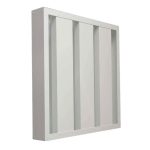
Kinetics Group manufactures sand trap louvers for protecting HVAC fresh-air intakes from airborne sand and large dust particles in desert and high-dust environments. Designed for efficient operation at low air velocities and moderate pressure drops, Kinetics sand trap louvers help reduce the dust load reaching downstream HVAC filters and equipment.

Standard and flush-mounted configurations are available in extruded aluminium, galvanized steel and stainless steel. Optional aluminium filters, volume control dampers and project-specific RAL powder-coated finishes can be provided for commercial, industrial, infrastructure and utility projects across the UAE, GCC and wider MENA region.

Product Details

Kinetics Noise Control Inc. Products

Product Description

Kinetics supplies high-performance sand trap louvers UAE projects use to protect outdoor air intakes from sand, dust, and large airborne particles. These louvers provide the first line of protection for HVAC systems, air-handling units, mechanical rooms, and ventilation equipment.

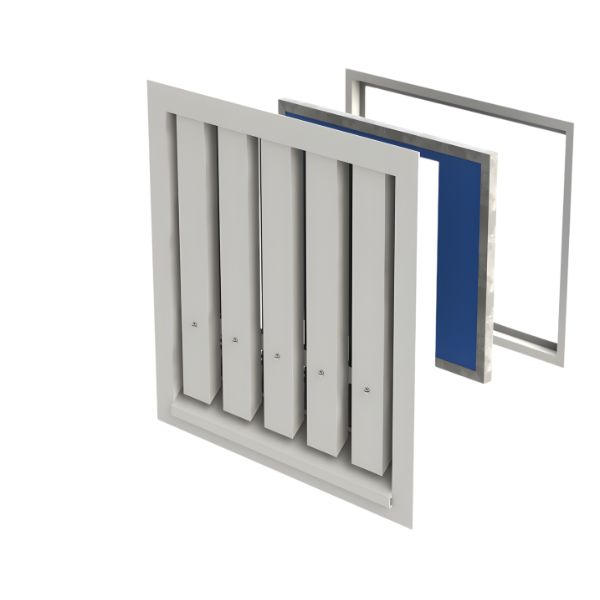
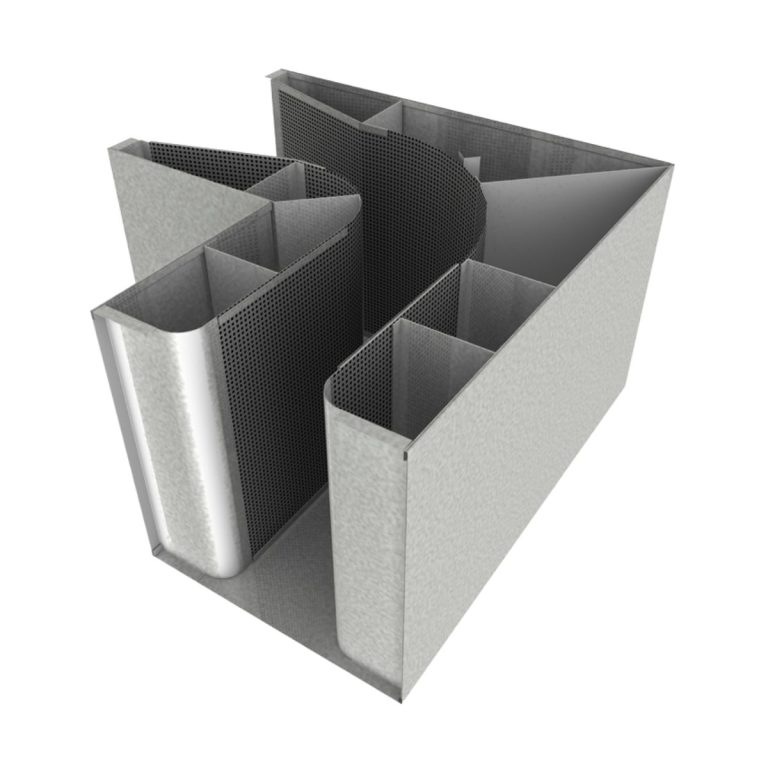
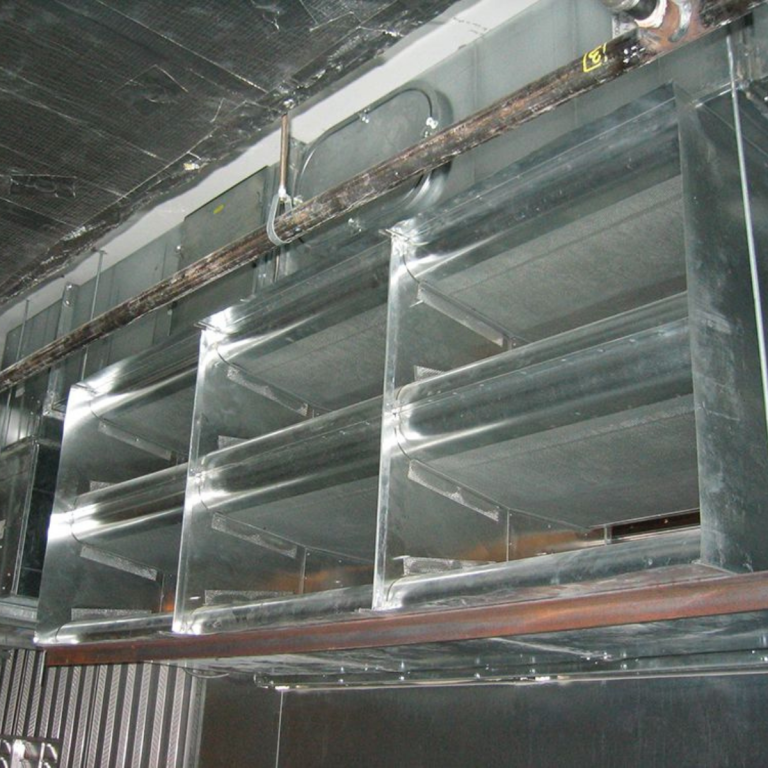
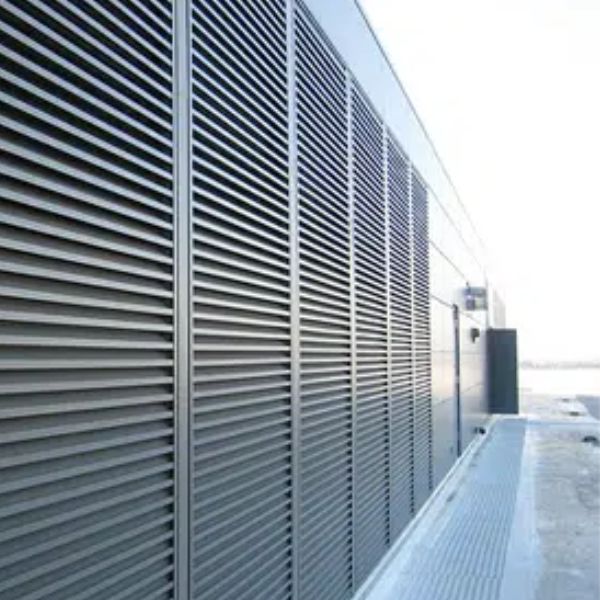
The specially designed vertical blades change the direction of incoming air. As a result, heavier sand particles lose momentum and separate from the airflow. Gravity then directs the particles toward the lower collection section. Finally, the self-emptying base allows the collected sand to leave the louver.

This separation process reduces the amount of coarse dust that reaches HVAC filters, coils, fans, and dampers. Therefore, the louver can reduce filter loading and support more reliable system operation. It can also help maintenance teams keep fresh-air intake areas cleaner.

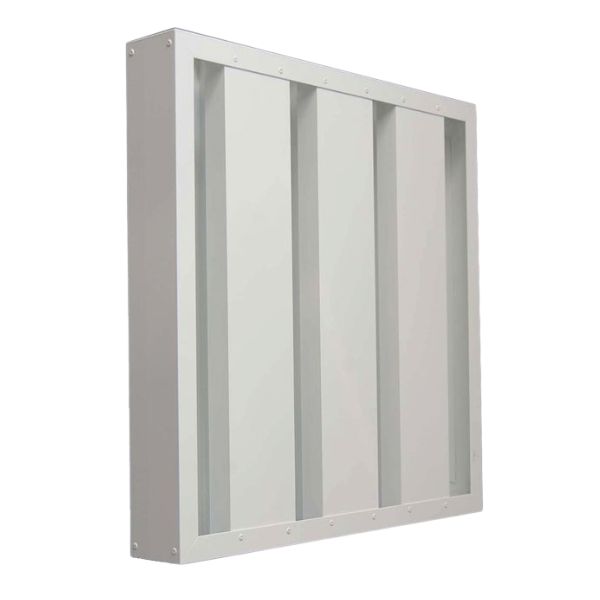
Kinetics offers both standard and flush-mounted configurations. The standard model suits typical wall and equipment intake openings. Meanwhile, the flush-mounted model supports projects that require a cleaner architectural finish.

Customers can select extruded aluminium, galvanized steel, or stainless-steel construction. In addition, Kinetics can provide optional aluminium filters and volume control dampers. Powder-coated finishes in selected RAL colours are also available. These options allow consultants and contractors to match project, environmental, and architectural requirements.

Kinetics designs its sand trap louvers for low face velocities and moderate pressure drops. Consequently, they suit many commercial, industrial, infrastructure, and utility applications. Typical locations include AHU and FAHU intakes, generator rooms, warehouses, data centres, factories, plantrooms, and electrical rooms.

The product performs especially well in desert, coastal, industrial, and high-dust environments. For this reason, sand trap louvers UAE projects specify can provide valuable protection against challenging outdoor conditions. They also support HVAC installations across the GCC, Middle East, North Africa, and wider MENA region.

Sand trap louvers remove large sand and dust particles. However, they do not replace the HVAC system’s required filtration stages. Designers should use them as a pre-separation device before the specified air filters. For further ventilation guidance, consult the ASHRAE standards and guidelines.

Explore Kinetics HVAC acoustic solutions, acoustic louvers, and industrial noise control solutions for related project requirements. You can also contact Kinetics Group for product selection, technical data, or quotation support.

Application

Kinetics Sand Trap Louvers are suitable for fresh-air intake and ventilation openings in:

  • Air-handling units
  • Fresh-air-handling units
  • Package air-conditioning units
  • Rooftop HVAC systems
  • Mechanical plantrooms
  • Generator rooms
  • Electrical and transformer rooms
  • Data centres
  • Warehouses and logistics facilities
  • Factories and manufacturing plants
  • Industrial ventilation systems
  • Utility and infrastructure facilities
  • Commercial buildings
  • Residential developments
  • Hospitals and healthcare facilities
  • Hotels and hospitality projects
  • Shopping malls and retail developments
  • Airports and transport facilities
  • District cooling plants
  • Oil and gas facilities
  • Coastal, desert, and high-dust environments

Features & Benefits

  • Specially designed vertical blade arrangement for separating large sand and dust particles
  • Self-emptying lower section for continuous discharge of collected sand
  • Standard and flush-mounted louver configurations
  • Suitable for outdoor fresh-air intake applications
  • Designed for efficient operation at low air velocities
  • Moderate pressure-drop characteristics
  • Extruded aluminium construction available
  • Galvanized steel and stainless-steel construction options
  • Optional aluminium filter
  • Optional volume control damper
  • Powder-coated finish available in specified RAL colours
  • Modular, multi-section construction available for large openings
  • Suitable for wall-mounted and HVAC equipment intake installations
  • Custom sizes and project-specific configurations available
  • Opening-air ratio of approximately 0.33, subject to model and size
  • Reduces the amount of airborne sand entering HVAC and ventilation systems
  • Helps protect filters, coils, fans, dampers, and internal equipment
  • Reduces premature loading of downstream air filters
  • Supports more reliable HVAC operation in desert and dusty environments
  • Helps reduce maintenance requirements caused by sand accumulation
  • Extends the service life of downstream filtration components
  • Provides a passive sand-separation solution without moving parts
  • Allows collected sand to discharge through the self-emptying base
  • Offers material options for different environmental and corrosion conditions
  • Supports architectural coordination through flush-mounted configurations and custom finishes
  • Can be integrated with filters and volume control dampers
  • Suitable for custom fabrication and large project openings
  • Manufactured for UAE, GCC, Middle East, and MENA project requirements

Installation Guidelines

Kinetics Sand Trap Louvers should be installed vertically at the outdoor-air intake opening, with the sand-discharge section positioned at the bottom. The louver must be installed in the correct airflow direction and in accordance with the approved shop drawings, project specifications, and manufacturer’s installation details.

The supporting wall, frame, duct connection, or structural opening must be level, rigid, and capable of supporting the complete louver assembly. The perimeter should be securely fixed using suitable corrosion-resistant fasteners appropriate for the substrate and environmental conditions.

Adequate clearance must be maintained below the self-emptying discharge section so that collected sand can exit freely. The discharge openings must not be blocked by sealant, flooring, kerbs, insulation, cladding, or other construction elements.

For large openings, multi-section louvers should be assembled and supported in accordance with the approved sectional arrangement. Intermediate structural supports may be required depending on the overall size, wind load, material, and installation location.

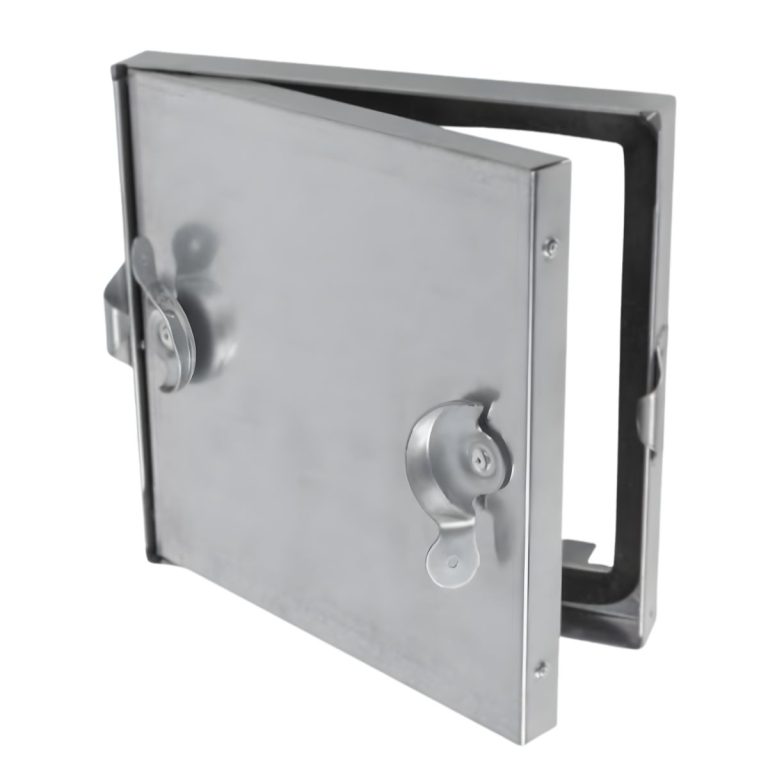
All perimeter joints should be properly sealed to prevent uncontrolled air leakage and water penetration. Where filters or volume control dampers are included, sufficient access must be provided for inspection, cleaning, adjustment, and replacement.

After installation:

  • Confirm that the louver is level, plumb, and securely fixed
  • Check that the airflow direction is correct
  • Ensure that the sand-discharge openings remain clear
  • Remove protective films, construction dust, and installation debris
  • Inspect blades for damage or obstruction
  • Confirm that optional filters and dampers are accessible
  • Check that all section joints and perimeter seals are complete

The louver should be inspected periodically, particularly in areas with heavy sandstorms or high airborne dust levels. Accumulated debris should be removed from the blades, discharge section, filters, and surrounding intake area to maintain airflow and performance.

Final selection and installation should be based on the required airflow, opening dimensions, face velocity, allowable pressure drop, material, finish, environmental exposure, and project-specific engineering requirements.

Available Downloads Options

Datasheet
PDF
Installation Guide
wpChatIcon
wpChatIcon

Send Us a Message