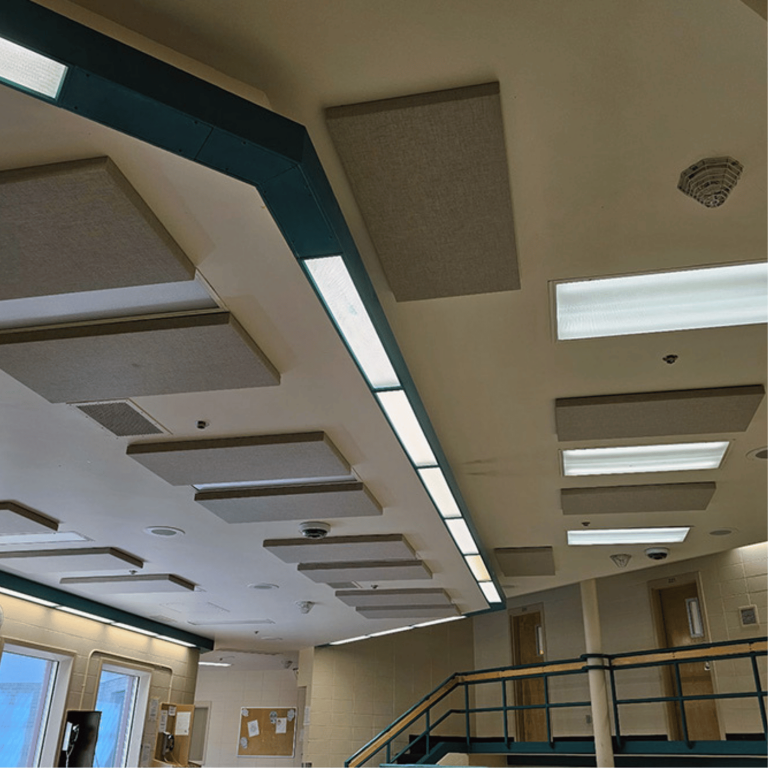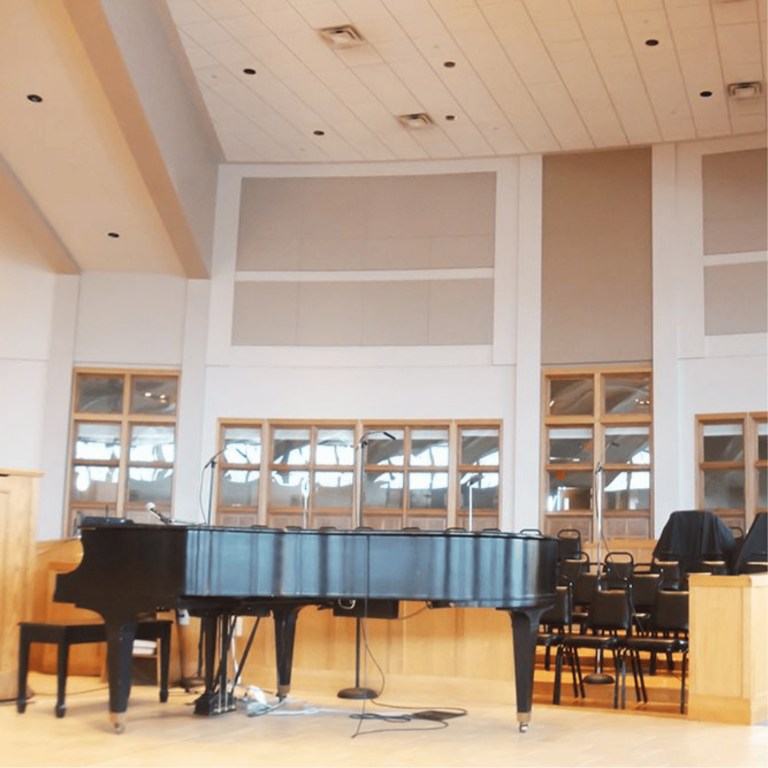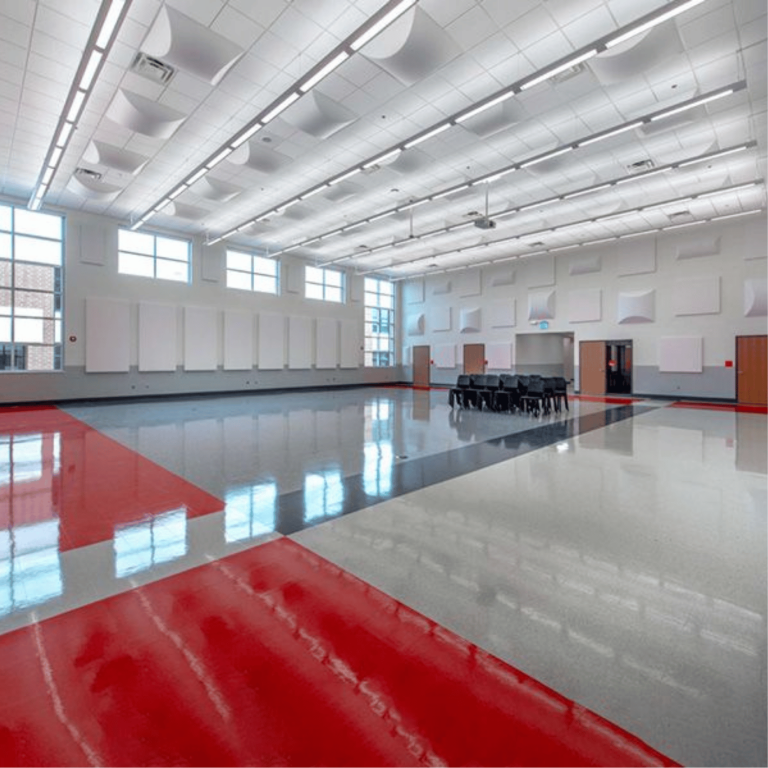
KINETICS® TAD Tuned Absorber/Diffuser Panels are engineered acoustic treatments that combine low- and mid-frequency sound absorption with controlled high-frequency reflection and diffusion. Using a sound-absorptive fibrous core behind a variable-impedance laminate, TAD helps create a more balanced and natural acoustic environment for auditoriums, studios, home theatres, rehearsal rooms and other critical listening spaces across the UAE and wider MENA region.
Engineered for Performance.
KINETICS® TAD is an engineered acoustic panel designed to combine tuned sound absorption with controlled high-frequency reflection and diffusion.
Unlike conventional fabric-wrapped absorbers that primarily reduce reflected sound across broad frequency ranges, TAD is designed to absorb more low- and mid-frequency energy while allowing selected higher-frequency energy to remain active and diffuse throughout the room.
This helps create a more natural acoustic balance in spaces where musical clarity, speech intelligibility and spatial character are important.
The acoustic performance of TAD is created by combining:
The openings in the laminate are sized and spaced to improve absorption at lower frequencies while the reflective areas between openings scatter and reflect higher-frequency sound.
This allows a single panel to provide both:
within the same wall treatment.
Standard porous acoustic panels are very effective at absorbing mid- and high-frequency sound.
In some rooms, however, excessive high-frequency absorption can create an acoustically unbalanced environment.
This may occur when a room already includes absorptive finishes such as:
If too much upper-frequency energy is removed while lower-frequency reverberation remains, the room may sound dull or lifeless.
TAD helps address this condition by maintaining more high-frequency energy while controlling lower and middle frequencies.
A key component of the TAD design is its variable-impedance laminate.
Openings in the laminate allow sound energy to reach the absorptive core behind the surface.
The remaining reflective areas create randomized mid- and high-frequency reflections rather than absorbing all incident sound.
Kinetics acoustically optimizes the opening pattern while maintaining the required balance between:
This engineered approach differentiates TAD from conventional fabric-wrapped acoustic panels.
TAD is particularly useful where increased low- and mid-frequency absorption is needed without excessive high-frequency absorption.
For increased low-frequency performance, Kinetics allows the use of thicker fibrous cores.
Published TAD configurations include panel thicknesses ranging from approximately:
Thicker cores can be specified where stronger low-frequency absorption is required.
At higher frequencies, the reflective areas between the laminate openings scatter sound energy back into the room.
This helps:
The result is a more balanced room response than would typically be achieved using absorptive panels alone.
Kinetics provides different laminate opening sizes depending on the required acoustic response.
The standard TAD configuration uses approximately:
1/2 in. openings
Where increased high-frequency absorption is desired, the opening diameter can be increased to approximately:
5/8 in.
The opening configuration should be selected based on the acoustic design objectives of the room.
TAD panels can be finished using acoustically appropriate fabric or vinyl coverings.
Available fabric selections include Kinetics-approved acoustic fabrics such as:
Other approved fabric selections may also be available depending on the project.
The finish allows TAD panels to integrate visually into architectural interiors while concealing the tuned acoustic construction beneath.
Kinetics fabric-panel guidance identifies TAD panels in standard sizes up to approximately:
4 ft. × 10 ft.
Available edge treatments include:
Panel dimensions and edge profiles can therefore be coordinated with architectural layouts, wall modules and interior finishes.
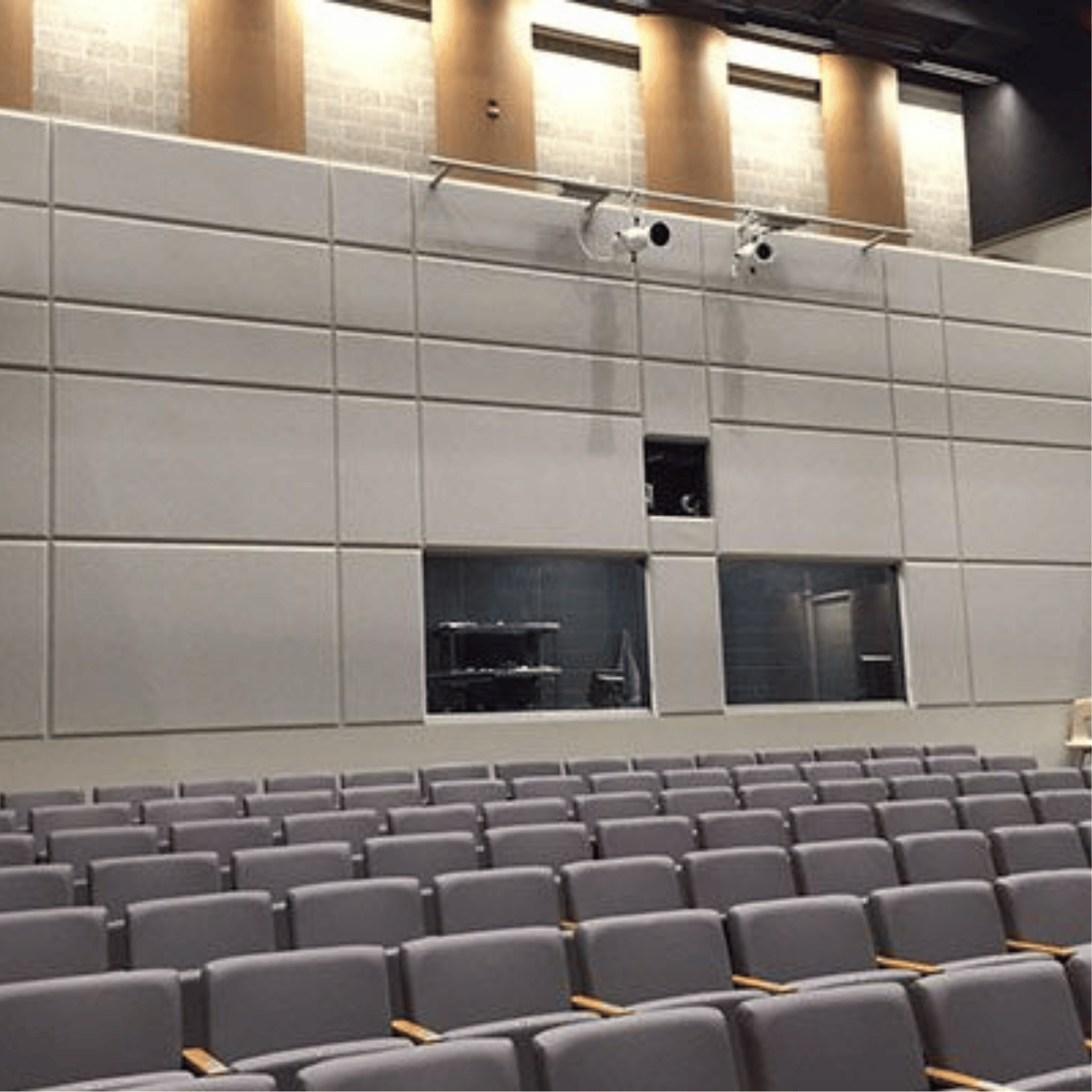
TAD is particularly suitable for auditoriums and performing arts spaces where maintaining a natural balance between absorption and diffusion is critical.
Typical benefits include:
Kinetics specifically identifies auditoriums and performance spaces as environments where engineered absorption and reflection should work together rather than relying only on broadband absorption.
Critical listening rooms require accurate sound reproduction and controlled reflections.
TAD can help studios maintain useful high-frequency energy while reducing excessive low- and mid-frequency reverberation.
Typical applications include:
This makes the panel particularly valuable where tonal balance is more important than maximum broadband absorption.
Home theatres frequently contain:
These materials can already absorb significant high-frequency sound.
TAD can be incorporated into a home theatre design to control lower-frequency reverberation while preventing the room from becoming excessively dead at higher frequencies.
Kinetics includes TAD among its specialist room-treatment products for critical listening and home-theatre environments.
Musical spaces benefit from a controlled balance of absorption and reflection.
TAD can be used in:
The combination of tuned absorption and diffusion helps preserve musical character while controlling excessive room buildup.
A conventional fiberglass acoustic panel is designed primarily to absorb reflected sound.
TAD performs differently.
TAD:
A conventional panel:
The correct choice depends on the acoustic balance of the room.
TAD and VersaTune are both engineered acoustic treatments, but they address different room-balance requirements.
TAD
VersaTune
Kinetics positions both as specialist alternatives to conventional acoustic absorbers.
TAD and TAD Revealed use a similar underlying acoustic concept but present very different architectural finishes.
TAD
TAD Revealed
TAD Revealed is therefore appropriate where the designer wants the tuned absorption/diffusion concept expressed through a finished wood surface.
Kinetics Group supports acoustic consultants, architects, studios, theatres, developers and contractors with room-acoustic design solutions across the UAE, GCC, Middle East and wider MENA region.
TAD panel selection should consider:
Explore the wider Kinetics acoustic solutions or contact the Kinetics technical team for project-specific acoustic selection.
RESOURCES
FABRIC SELECTION
INSTALLATION GUIDELINES
Permanent
Removable
Field Modifications
TAD stands for Tuned Absorber/Diffuser. It is an engineered acoustic panel designed to absorb low- and mid-frequency sound while maintaining greater reflection and diffusion at higher frequencies.
TAD combines a fibrous acoustic core with a variable-impedance laminate. Openings in the laminate allow sound to reach the absorber, while reflective areas between the openings scatter higher-frequency sound.
Conventional absorbers can remove significant high-frequency sound. TAD is useful where greater low- and mid-frequency absorption is needed while retaining more upper-frequency energy and diffusion.
Typical applications include auditoriums, recording studios, mixing rooms, rehearsal spaces, home theatres, broadcast rooms and other critical listening environments.
Yes. Kinetics states that thicker fibrous cores, including 2 to 4 inch configurations, can be used where increased low-frequency absorption is required.
Yes. The reflective areas between the laminate openings create randomized higher-frequency reflections, which help diffuse sound rather than absorbing all of it.
TAD can be supplied with fabric or vinyl coverings, including Kinetics-approved acoustical fabrics.
Kinetics’ fabric-panel guidance identifies TAD sizes in standard increments up to approximately 4 × 10 ft
TAD uses a fabric or vinyl finish, while TAD Revealed uses a visible wood or laminate surface with the acoustically optimized perforation pattern exposed as part of the design.
Yes. Kinetics includes TAD among its specialist treatments for critical listening and home-theatre applications.
Permanent
Removable
Field Modifications
For TAD installation guidelines, panel layout, thickness selection, fabric or vinyl coordination, tuned opening configuration or project-specific acoustic support, please contact the Kinetics Group technical team.
Final panel quantity, thickness and placement should follow the approved acoustic design and project submittal.