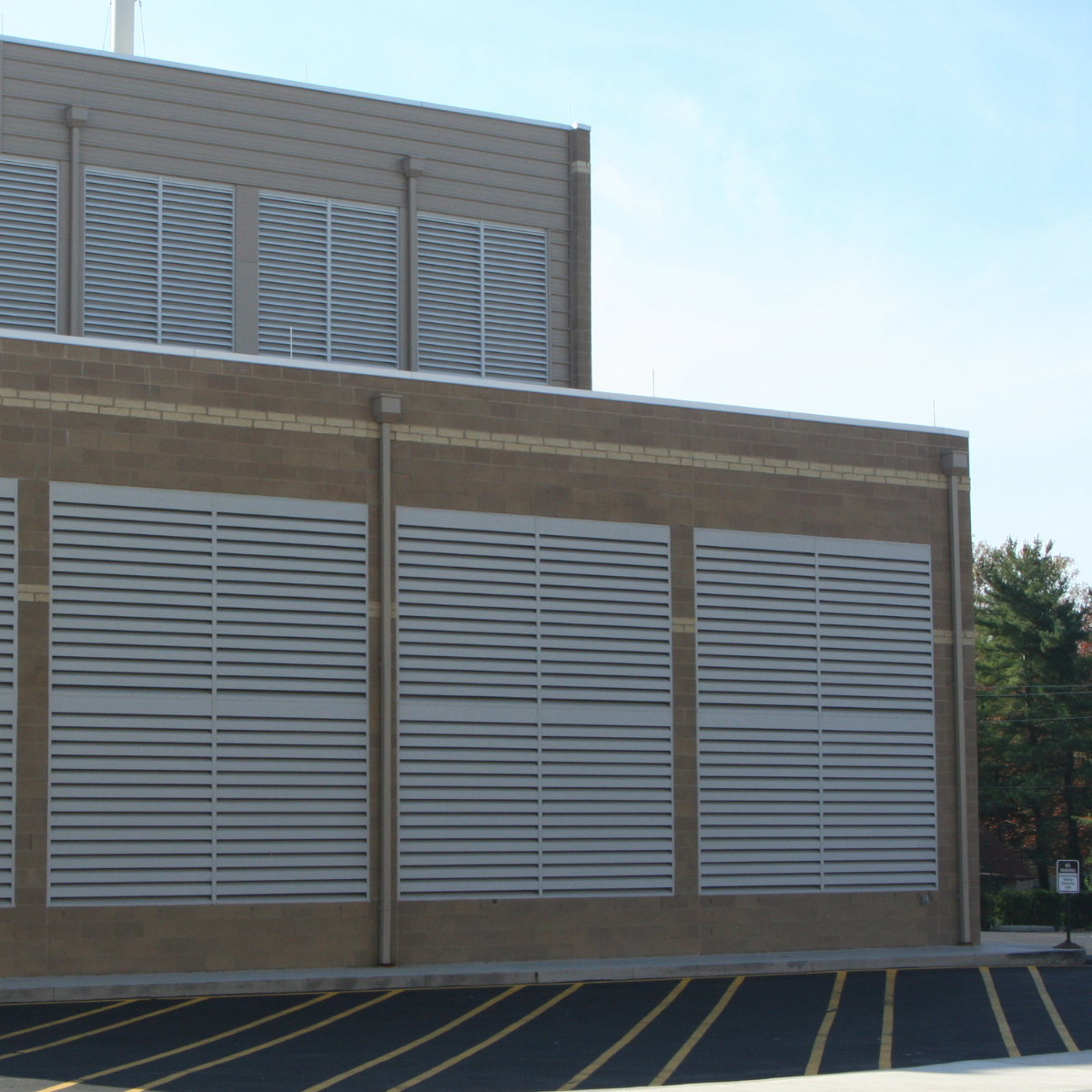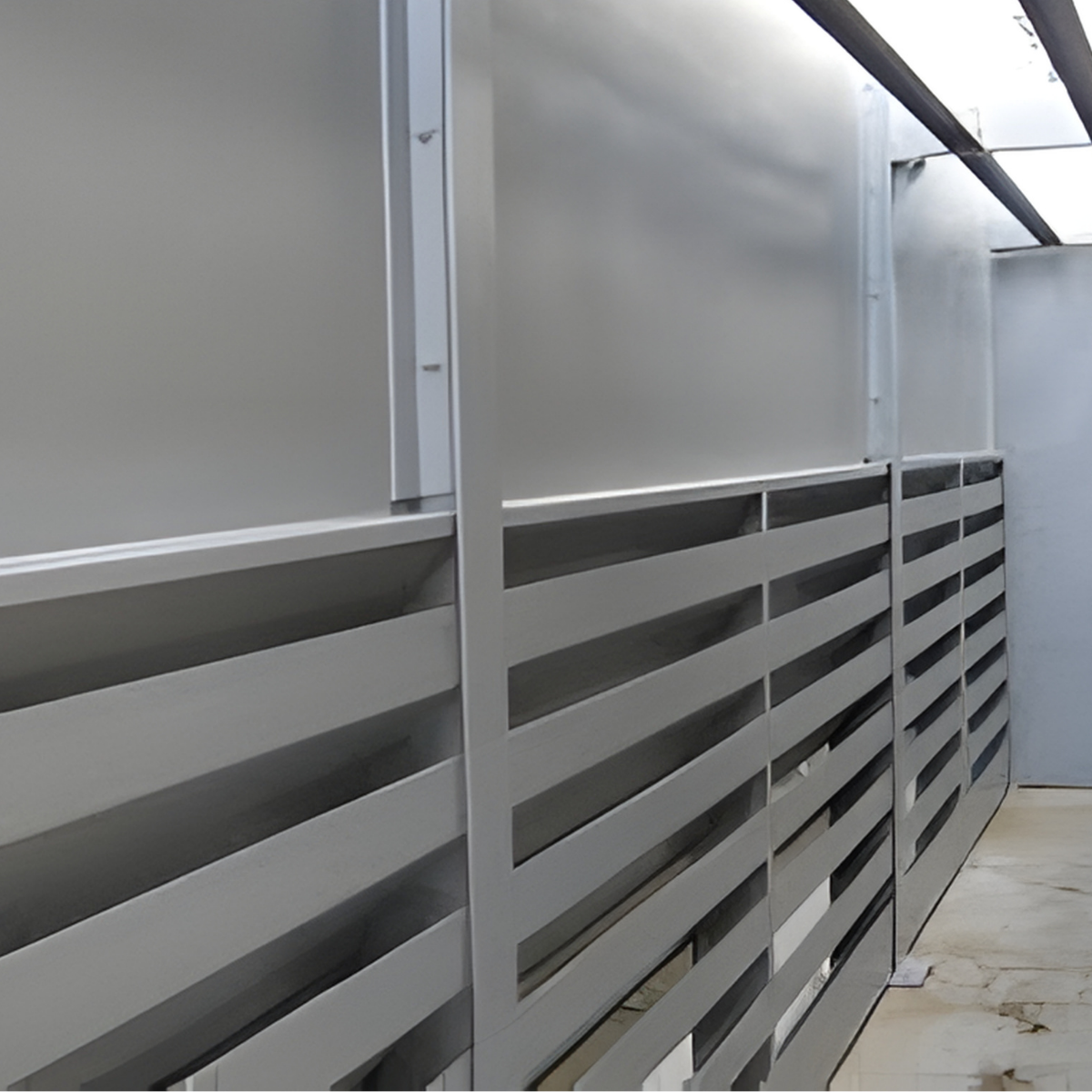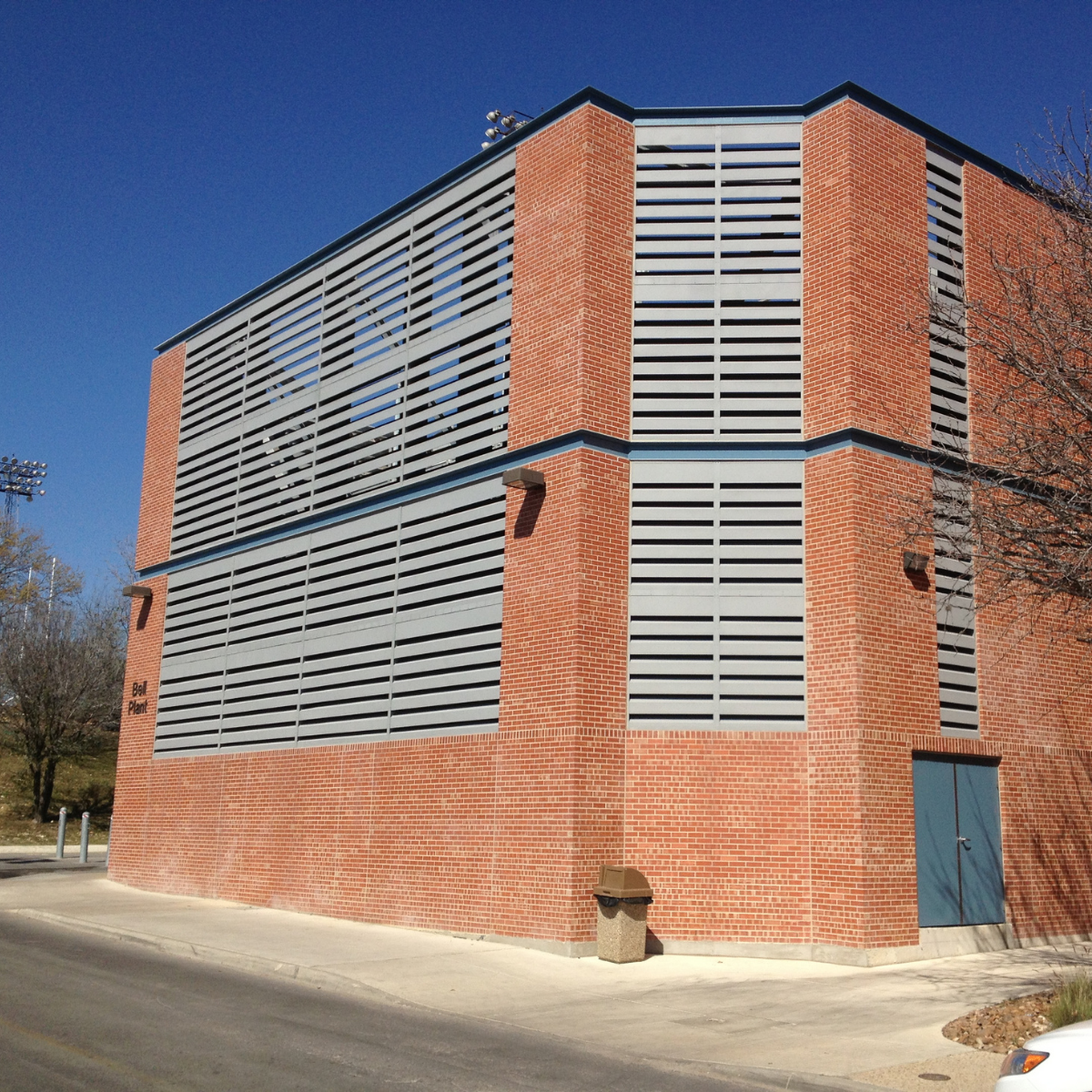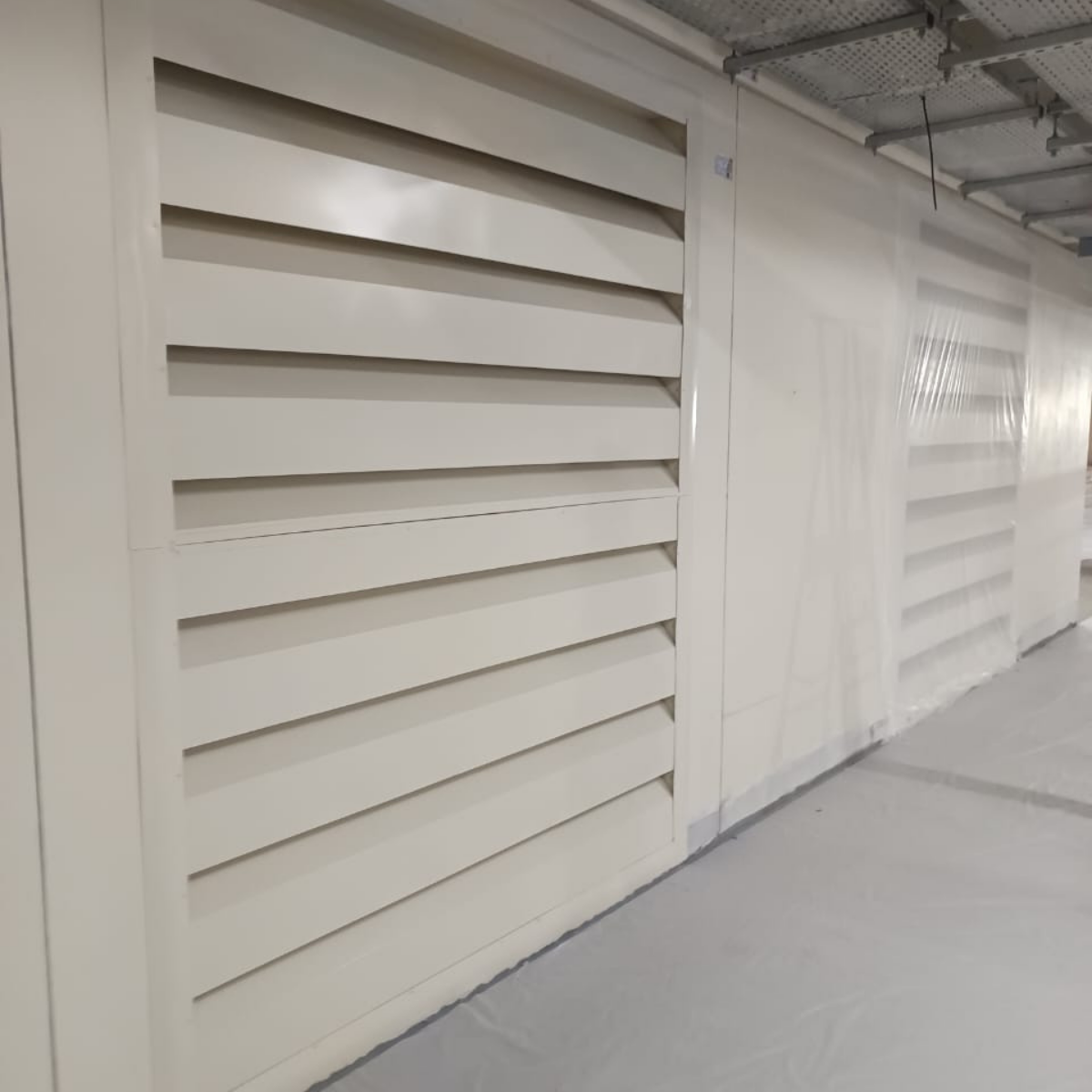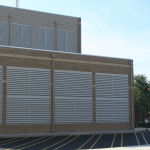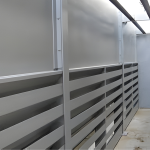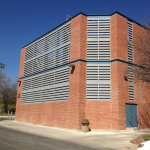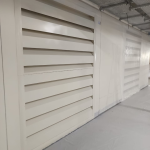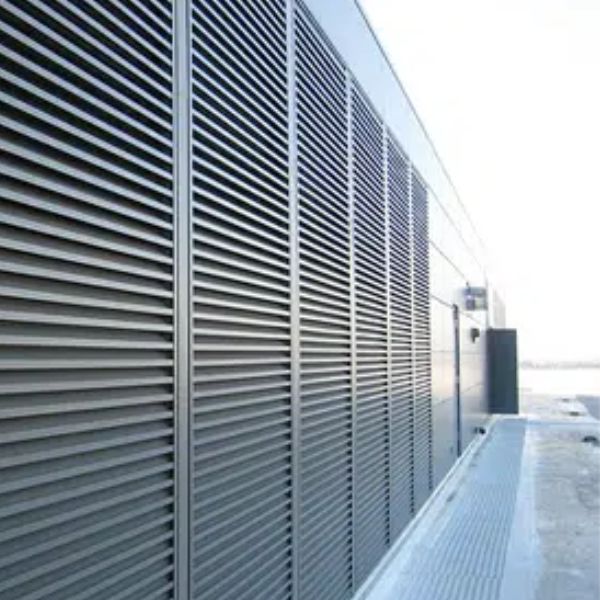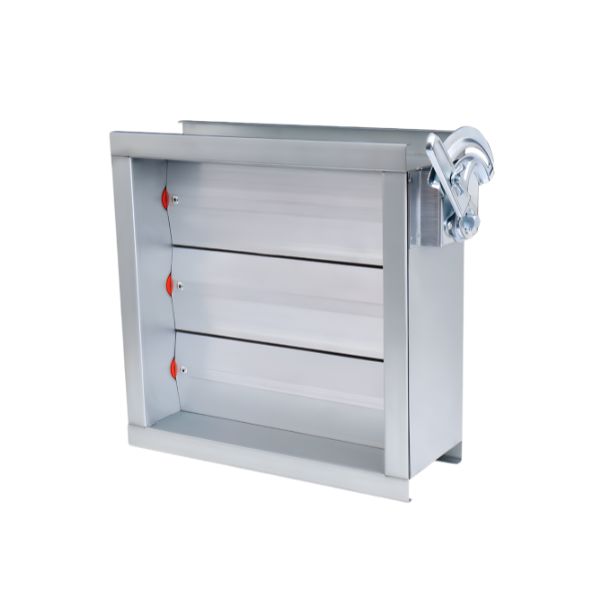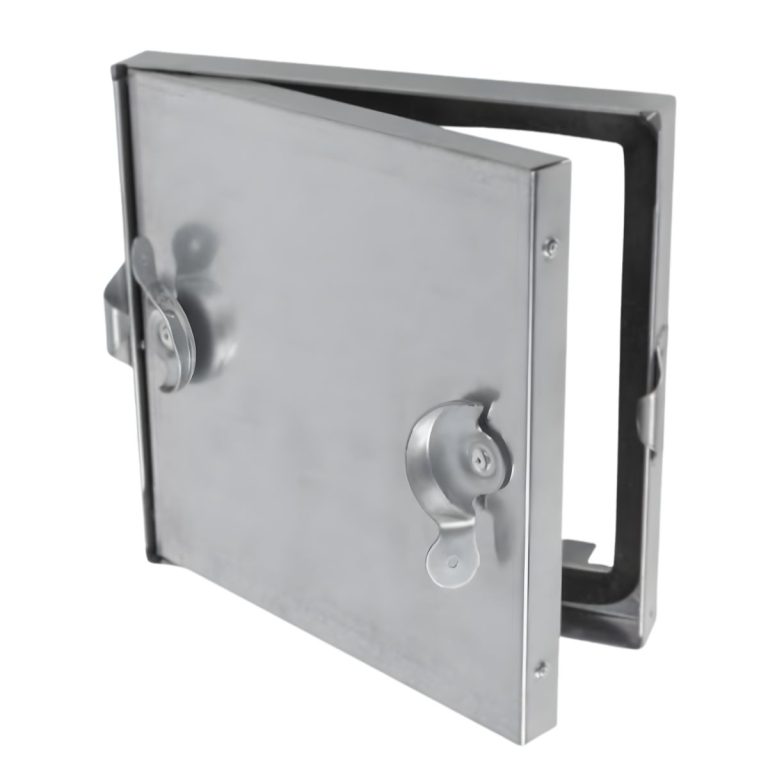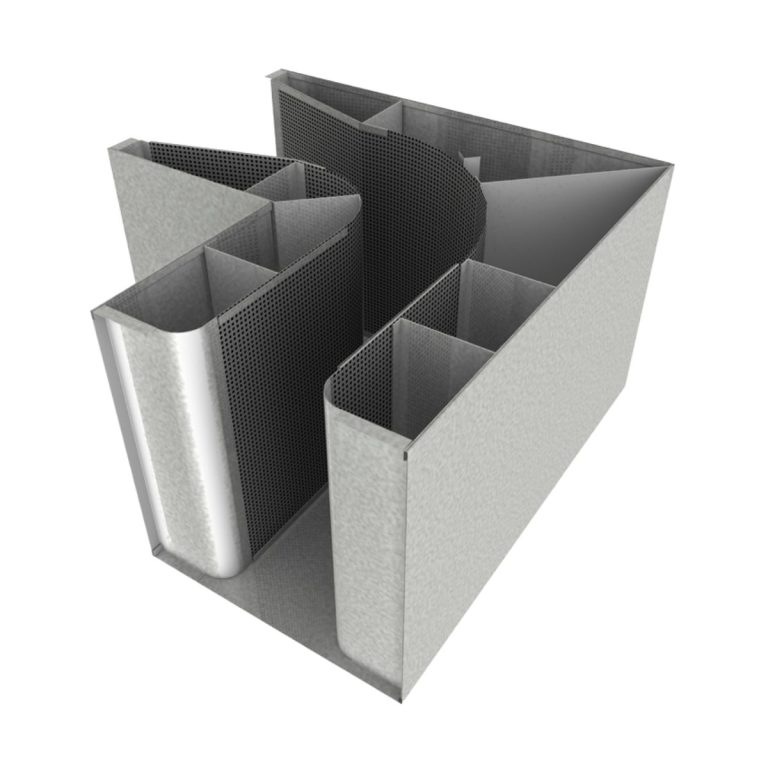
Kinetics Group provides engineered acoustic louvers for UAE, GCC and MENA projects where ventilation airflow must be maintained while equipment noise is controlled. Fixed-blade acoustic louvers can be installed at intake and exhaust openings serving plant rooms, generators, cooling towers, chillers, data centers and other HVAC or industrial equipment.
Available in multiple blade configurations, depths, open-area percentages and material options, Kinetics acoustic louvers can be selected to balance sound attenuation, pressure drop, weather exposure and architectural requirements. Kinetics Group supports consultants, contractors and project owners with product selection, technical documentation and project-specific noise control solutions.
Engineered for Performance.
KINETICS® Fixed Blade Acoustic Louvers are engineered to reduce noise passing through ventilation openings while maintaining the intake or exhaust airflow required by HVAC and industrial equipment.
As an acoustic louver supplier in the UAE, Kinetics Group supports acoustic consultants, MEP engineers, architects, contractors and developers with product selection for projects across Dubai, Abu Dhabi, the GCC, Middle East and MENA region.
The KINETICS® acoustic louver range includes KCDC, KCAC, KCPL, KCAL and KCFL models. Different blade configurations, depths, materials and open-area options are available to address project-specific acoustic, aerodynamic, architectural, security and space requirements.
An acoustic louver is a sound-attenuating ventilation assembly that reduces noise transmission through an air intake or exhaust opening while allowing air to pass through the system.
Acoustic louvers use specially configured blades containing sound-absorbing material. As sound travels through the louver, acoustic energy is absorbed within the blade passages. The louver can therefore control equipment noise without completely enclosing or obstructing the ventilation opening.
Acoustic louvers are commonly installed in building façades, plant rooms, generator rooms, pump rooms, data centres, cooling tower areas, rooftop mechanical screens, acoustic enclosures and noise barrier walls.
Mechanical and industrial equipment often requires substantial airflow for cooling, combustion, heat rejection or room ventilation. Leaving the associated intake and exhaust openings untreated can allow equipment noise to escape into occupied buildings or surrounding communities.
KINETICS® Fixed Blade Acoustic Louvers provide a compact noise-control solution for applications where the available space may not permit the use of a longer duct silencer.
Each louver should be selected according to the required acoustic performance and the operating conditions of the ventilation system. Important selection criteria include:
Kinetics Group can assist project teams in comparing the available models and identifying an appropriate configuration for the application.
KCDC Acoustic Louvers are designed for data centres and other high-airflow applications where acoustic control, visual screening and a high percentage of open area are required.
The KCDC uses a chevron-style blade arrangement with no direct line of sight through the louver. The model is available in a 12-inch depth and can provide up to 51% open area, depending on the selected configuration.
KCDC Acoustic Louvers can be considered for:
The final selection should be based on the required airflow, face velocity, pressure drop, sound spectrum and project noise criteria.
KCAC Acoustic Louvers are intended for applications where higher sound attenuation and visual or security screening are important design requirements.
The KCAC blade arrangement provides no direct line of sight through the louver. Models are available with approximately 30–40% open area and in 12-inch, 16-inch or 24-inch depths.
The range of available depths allows the acoustic design to be coordinated with the available installation space and required noise reduction.
KCAC Acoustic Louvers are suitable for:
Project-specific acoustic and aerodynamic performance data should be reviewed before the final model and depth are specified.
KCPL Acoustic Louvers are designed for applications where low-frequency mechanical or industrial noise is an important part of the sound spectrum.
The KCPL configuration uses relatively small vane spacing and is available with approximately 30–40% open area. Standard depth options include 6-inch, 8-inch and 12-inch models.
KCPL Acoustic Louvers can be considered for noise generated by:
Low-frequency noise can be more difficult to control than mid- or high-frequency sound. Louver selection should therefore be based on octave-band equipment data rather than a single overall dBA value.
KCAL Acoustic Louvers provide a practical balance between noise attenuation, ventilation performance, lightweight construction and project cost.
KCAL models provide approximately 40–50% open area and are available in 6-inch or 12-inch depths. Their configuration is suitable for applications where pressure drop, installation weight and commercial value are important considerations.
KCAL Acoustic Louvers can be used for:
KCAL may be suitable for many general-purpose applications, but final selection should still be confirmed against the required insertion loss and allowable system pressure drop.
KCFL Acoustic Louvers use an airfoil blade profile designed to reduce pressure losses at higher face velocities.
The KCFL is particularly suitable for pressure-sensitive applications where aerodynamic performance and architectural appearance are important. Models are available in 6-inch, 8-inch and 12-inch depths, with approximately 33–38% open area depending on the configuration.
KCFL Airfoil Blade Acoustic Louvers can be considered for:
The correct depth and louver size should be selected using approved acoustic and aerodynamic performance data.
| Model | Primary Selection Priority | Open Area | Available Depths | Typical Applications |
|---|---|---|---|---|
| KCDC | Data centres and high open area | Up to 51% | 12 inches | Data centres, high-airflow ventilation and screened openings |
| KCAC | Higher attenuation and no sight line | Approximately 30–40% | 12, 16 or 24 inches | Generators, secure openings and high-noise equipment |
| KCPL | Low-frequency noise control | Approximately 30–40% | 6, 8 or 12 inches | Fans, pumps, generators and industrial machinery |
| KCAL | Low pressure drop and cost-effective selection | Approximately 40–50% | 6 or 12 inches | General HVAC, plant rooms, intakes and exhausts |
| KCFL | Airfoil performance at higher velocities | Approximately 33–38% | 6, 8 or 12 inches | Pressure-sensitive and architectural applications |
Open-area percentages and dimensions are model-level reference information. Final product selection and specifications must be confirmed using the latest approved KINETICS® technical data.
Acoustic louver performance cannot be evaluated using noise reduction alone. The louver forms part of the ventilation system and must also deliver the required airflow without creating excessive resistance.
The acoustic selection should consider the equipment sound-power or sound-pressure spectrum at each relevant octave band. This is particularly important when the equipment generates substantial low-frequency noise.
The project acoustic consultant should identify:
Pressure drop increases as airflow velocity through the louver increases. A louver that is too small may create unnecessary system resistance, increase fan energy consumption or reduce the available ventilation airflow.
The aerodynamic review should consider:
Increasing the louver area can often reduce face velocity and pressure drop. The final opening size should be coordinated early with the architect, façade consultant, structural engineer and MEP designer.
KINETICS® Acoustic Louvers can be supplied in different construction materials and finishes, subject to the selected model and project requirements.
Available options may include:
Material selection should consider whether the louver will be installed indoors, outdoors, near the coast, in an industrial environment or in an area exposed to chemicals, humidity, sand or airborne contaminants.
For UAE and GCC projects, the specification should also address corrosion resistance, solar exposure, wind loading, drainage, weather protection and long-term maintenance.
Contact Kinetics Group to confirm the material and finish options available for the required model.
The acoustic louver should be selected as part of the complete HVAC or equipment noise-control design.
Provide the following information when requesting a selection:
Kinetics Group can use this information to assist with model comparison, opening-size coordination and technical product selection.
Kinetics Group provides integrated noise and vibration control solutions for commercial, industrial, infrastructure and environmental projects across the UAE and MENA region.
Project teams benefit from:
Kinetics Group can help coordinate acoustic louvers with sound attenuators, acoustic enclosures, noise barrier walls, pressurised plenums, acoustic treatments and vibration isolation systems.
An acoustic louver reduces noise transmission through a ventilation opening while allowing intake or exhaust airflow. It is normally used where mechanical or industrial equipment requires ventilation but an untreated opening would allow excessive noise to escape into occupied spaces or the surrounding environment.
An acoustic louver contains sound-absorbing blades arranged to create an acoustically treated airflow path. Sound energy entering the louver interacts with the absorptive blade surfaces and is reduced as it passes through the assembly. The amount of attenuation depends on blade configuration, louver depth, frequency and installation conditions.
A standard weather louver is primarily designed to allow airflow while limiting rain, debris or visual exposure. An acoustic louver also contains sound-absorbing elements and a deeper blade path designed to reduce noise. Weather resistance and acoustic performance must both be considered when an acoustic louver is installed outdoors.
An acoustic louver is normally installed in a wall, façade, enclosure or barrier opening and provides noise reduction across a relatively short depth. A duct silencer is installed within an air duct and can provide different levels of acoustic performance over a longer airflow path. The available space, airflow system and required attenuation determine the appropriate product.
The KCDC model is designed for data-centre and high-airflow applications. It provides up to 51% open area, a 12-inch-deep chevron blade arrangement and no direct line of sight. The final selection must still be checked against the data centre’s airflow, pressure-drop and acoustic requirements.
The KCPL model is intended for applications where low-frequency noise is an important design concern. It uses relatively small vane spacing and is available in multiple depths. Selection should be based on octave-band sound data from the equipment rather than only an overall dBA level.
KCAL is designed as a low-pressure-drop, cost-effective louver for general HVAC applications. KCFL uses an airfoil blade profile and is intended for pressure-sensitive applications, including systems operating at higher velocities. The best option depends on the required airflow, opening size, attenuation and allowable system resistance.
Acoustic louvers can be designed for outdoor installation, but the material, finish, drainage, weather exposure, corrosion conditions and wind loading must be reviewed. Coastal or industrial locations may require aluminium, stainless steel or a project-specific protective finish. Confirm the final construction with Kinetics Group.
Yes. Acoustic louvers are commonly used for generator-room combustion-air, cooling-air and exhaust-ventilation openings. The design must provide sufficient airflow while controlling generator noise. The required louver area should be calculated using the generator airflow demand, allowable pressure drop and octave-band sound data.
Large openings can normally be treated using multiple coordinated louver modules with suitable structural framing. Module size, lifting requirements, support steelwork, wind loading, perimeter sealing and installation access should be reviewed during the design and submittal process.
Provide the project location, equipment type, airflow, available opening dimensions, intake or exhaust arrangement, equipment noise data, required attenuation, maximum pressure drop, material, finish and installation drawings. This information allows Kinetics Group to review the application and recommend an appropriate model.
Kinetics Group supports acoustic consultants, MEP engineers and contractors with product comparison, opening-size coordination and technical submittals. Final performance and construction should be confirmed through approved model-specific data and project documentation.
Reduce equipment noise while maintaining the airflow required by your HVAC or industrial system.
Contact Kinetics Group for assistance with:
Call: +971 4 885 7361
Email: info@kineticsgroup.ae
Location: Dubai Investment Park 2, Dubai, UAE
KINETICS® Fixed Blade Acoustic Louvers can be incorporated into commercial, industrial, infrastructure and environmental noise-control systems.
Typical applications include:
Acoustic louvers can reduce noise escaping through data-centre ventilation openings while supporting the substantial airflow required by cooling systems and standby generators.
Generator rooms require combustion air, cooling airflow and heat removal. Acoustic louvers can treat intake and exhaust openings that would otherwise create a direct noise path to the surrounding environment.
Louvers can be installed in plant-room walls or façades to reduce noise from fans, pumps, air-handling equipment, compressors and other building services.
Acoustic louvers can form part of a complete cooling-tower or chiller noise-control system incorporating barriers, acoustic enclosures, sound attenuators or acoustic pergola systems.
Where mechanical rooms require permanent ventilation, acoustic louvers can reduce breakout noise through external wall openings.
Fixed blade acoustic louvers can provide silenced intake or exhaust ventilation for NOISEBLOCK™ Acoustic Enclosures while maintaining access to the airflow required by the enclosed equipment.
Acoustic louvers can be integrated into noise barrier systems where ventilation must pass through the barrier without creating an untreated direct sound path.
Architectural acoustic louvers can be coordinated with façade openings where mechanical ventilation and external noise control must be considered together.
Applications include manufacturing equipment, blowers, compressors, process machinery, utility systems, substations and other industrial sources requiring ventilation and noise reduction.
Acoustic louver performance depends on correct installation and coordination with the surrounding building or enclosure construction.
The project team should:
Large louver banks may require multiple modules and dedicated support steelwork. Structural and wind-load requirements should be reviewed by the responsible project engineer.