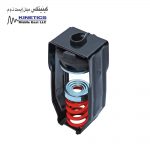
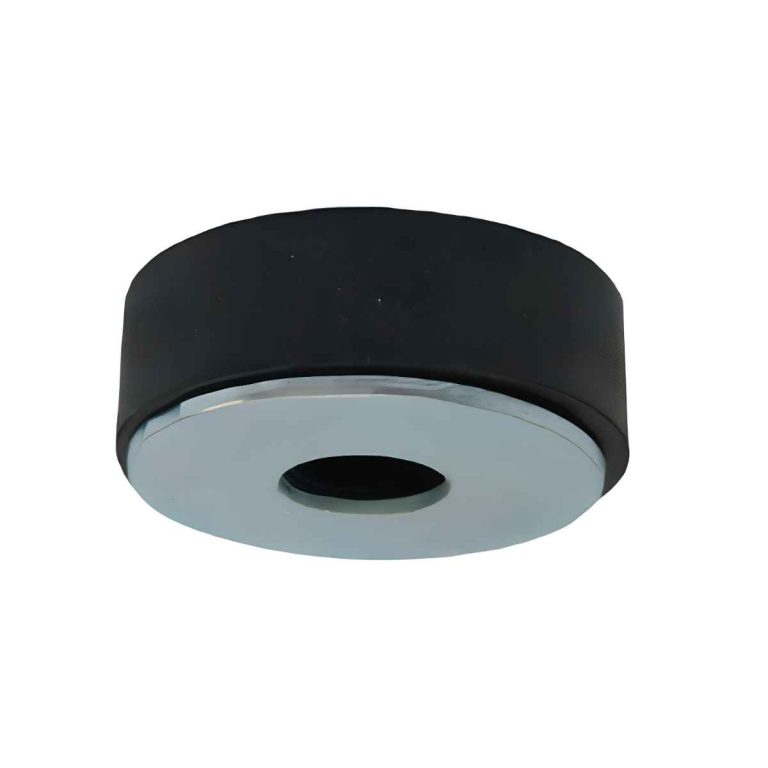
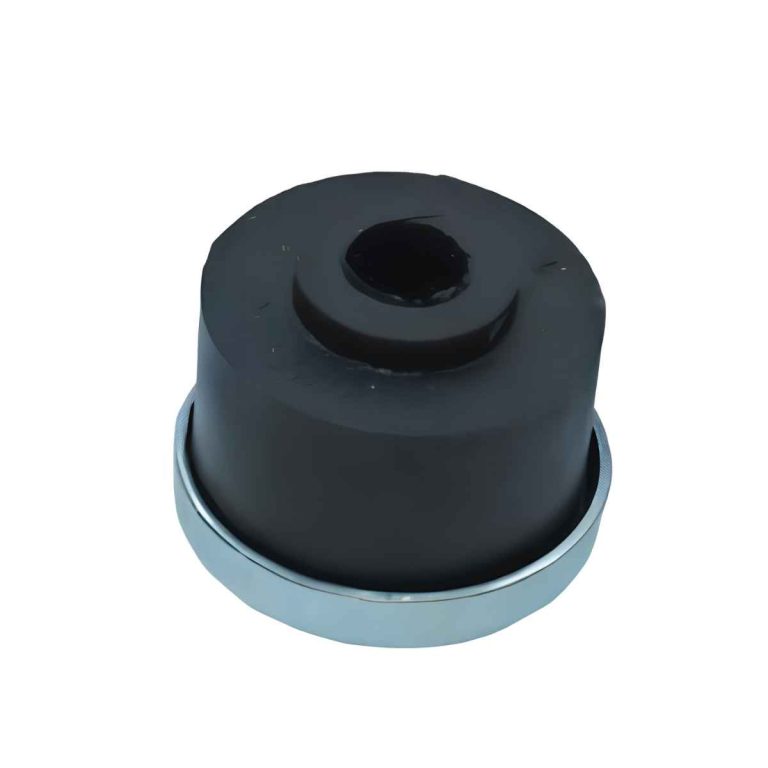
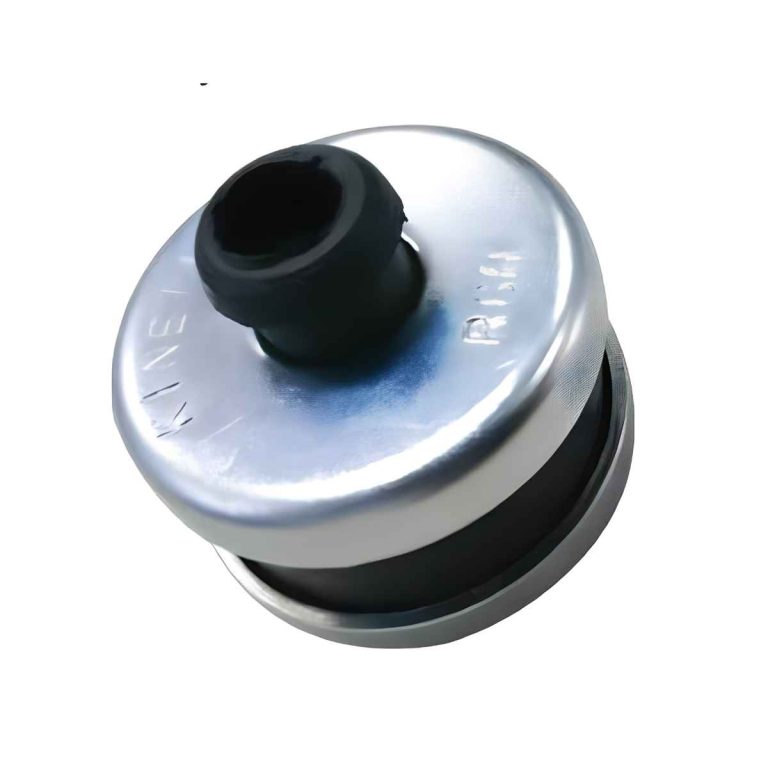
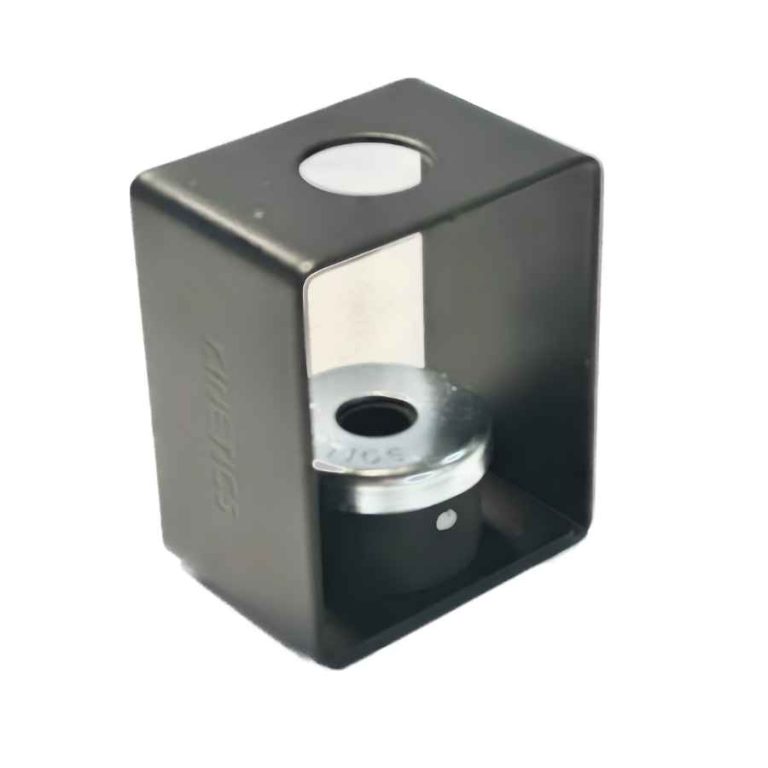
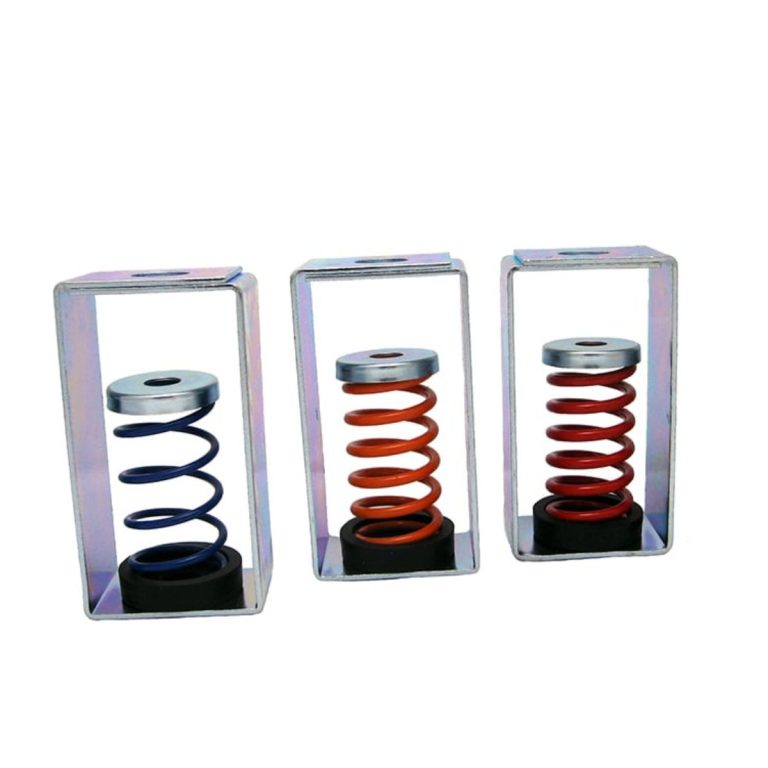
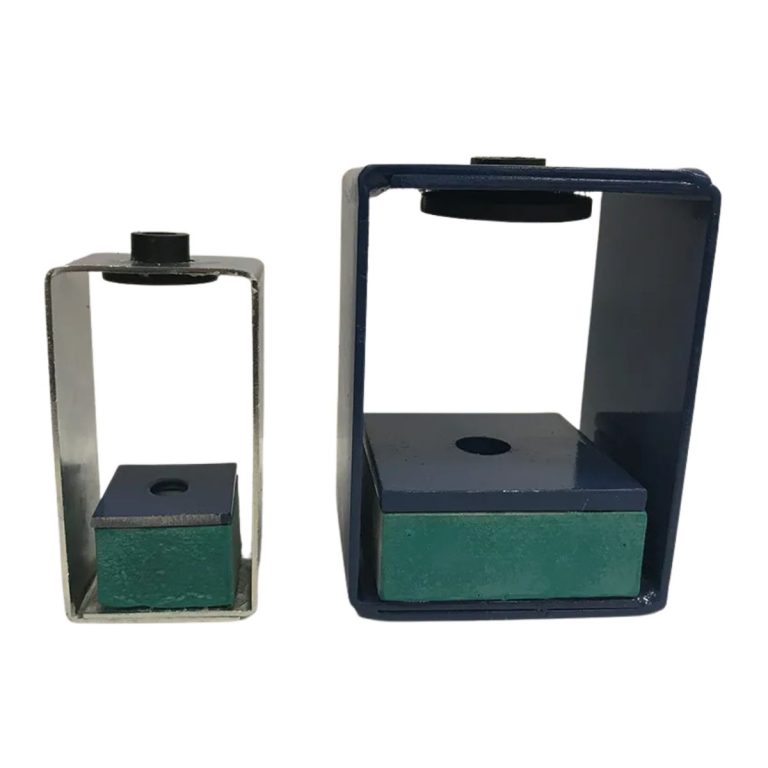
Kinetics Model SRH is a suspended vibration isolator consisting of a free-standing, laterally stable steel spring installed in series with a neoprene elastomer-in-shear insert and load plate. The components are assembled within a stamped or welded steel hanger bracket for installation in threaded-rod suspension systems.
The steel spring controls low-frequency vibration generated by rotating mechanical equipment, while the neoprene element helps reduce higher-frequency vibration and noise transmission. This combination makes the SRH suitable for suspended equipment and building services where both vibration and structure-borne noise must be controlled.
The hanger arrangement allows the lower suspension rod to move through a 30-degree arc without creating metal-to-metal contact or short-circuiting the isolation system. Standard SRH hangers are supplied assembled for integration into correctly sized suspension systems.
Product Overview
Kinetics SRH hangers use free-standing, large-diameter, laterally stable steel springs installed in series with an elastomer-in-shear insert. This complete isolation assembly sits inside a durable stamped or welded steel hanger bracket. As a result, the hanger supports suspended mechanical services while helping reduce vibration transfer into the building structure.
The SRH range covers multiple hanger configurations, including SRH-1, SRH-2, and SRH-4 models. Therefore, the product can support different project load and deflection requirements. Kinetics also offers the SRH hanger in a preloaded version under the SRPH designation, which helps simplify installation where piping or suspended services must remain at a fixed elevation.
| Selection parameter |
SRH information |
| Product type |
Spring and neoprene vibration isolation hanger |
| ASHRAE classification |
Type 3 spring isolator or hanger |
| Isolation elements |
Steel coil spring and elastomer-in-shear neoprene insert |
| Installation type |
Threaded-rod suspended installation |
| Primary applications |
Fans, pumps, ductwork, piping and suspended mechanical equipment |
| Published product-family capacity |
35–3,850 lb / 16–1,747 kg |
| Published product-family deflection |
1–2.40 in. and 4.05–4.75 in. / 25–61 mm and 104–112 mm |
| Rod-misalignment capability |
Up to a 30-degree arc |
| Bracket overload performance |
500% overload without failure |
| Product selection |
Based on supported operating load and specified static deflection |
How to Select an SRH Vibration Isolation Hanger
Select each SRH hanger according to the actual operating load supported at that suspension point and the static deflection required by the project specification. Do not divide the total equipment or service weight equally unless the load is distributed equally across every hanger location.
Submit the equipment operating weight, hanger quantity, support arrangement, equipment operating speed and specified spring deflection to Kinetics Group for model selection. Piping applications should also include pipe size, contents, insulation weight and support spacing.
The selected hanger must operate within its published load range so that the spring achieves the required deflection without being underloaded or overloaded.
Spring and Neoprene Vibration Control
SRH Spring and Neoprene Isolation Hangers provide effective isolation for suspended equipment, piping, and ductwork located near vibration-generating equipment. The steel spring helps control low-frequency vibration, while the neoprene elastomer-in-shear insert helps reduce higher-frequency noise and prevents metal-to-metal contact under normal operating conditions.
Each hanger includes a high-deflection, colour-coded spring element with load transfer plates. The colour coding helps identify load capacity, while the load transfer plates help maintain stable and predictable isolation performance. In addition, the spring design provides lateral stability and helps reduce the risk of isolation short-circuiting.
Designed for HVAC and MEP Installations
SRH hangers suit suspended mechanical equipment such as in-line fans, cabinet fans, piping, and ductwork. They also work well in mechanical rooms, plant rooms, chiller plants, commercial buildings, hospitals, hotels, schools, data centres, industrial facilities, and infrastructure projects.
For piping applications, Kinetics recommends installing spring hangers on all piping within the equipment room and on the first 50 ft / 15 m of piping extending beyond the equipment room. For typical installations, the three hangers closest to the equipment should match the equipment isolator deflection, while the remaining hangers should provide a minimum deflection of 1 in. / 25 mm. In noise-sensitive areas, hangers should match the equipment isolation deflection, and all piping within the building should be isolated.
Stable Hanger Construction
SRH hangers are designed for threaded metal rod suspension systems and are shipped fully assembled for installation. Accessories are also available for wire or strap suspension systems.
The spring element has minimum lateral stiffness equal to its rated vertical stiffness. Therefore, the hanger can allow support rod misalignment through a 30° arc without metal-to-metal contact or isolation short-circuiting. The hanger bracket assembly is designed to withstand up to 500% overload without failure, supporting dependable performance in demanding MEP and HVAC installations.
Durability and Specification Support
The SRH hanger bracket and spring coil use a polyester powder-coated finish. According to the product specification, the bracket finish has independent laboratory testing for a minimum of 1,000 hours of salt spray fog exposure per ASTM B117 without signs of corrosion. The elastomer insert uses moulded oil-resistant compounds and is selected to operate within its published load range.
SRH Spring and Neoprene Isolation Hangers are referenced under Division 23 HVAC, Section 230548: Vibration Isolation, and classified as ASHRAE Type 3 isolators. They are suitable for suspended equipment with minimum static deflection requirements exceeding 0.4 in. / 10 mm, where both high- and low-frequency vibration isolation are required.
Self-Centering Cap Design
SRH hangers incorporate a self-centering spring cap or equivalent device to help maintain rod alignment and prevent short-circuiting of the isolation system. The patented self-centering no-short cap is featured on 1 in. and 2 in. SRH hangers. Its indexed steps correspond to standard washer diameters for the correct rod diameter, helping the washer and rod remain centered in the cap.
The combination isolation hanger assembly with neoprene insert shall be Model SRH, as manufactured by Kinetics Noise Control, Inc.
RESOURCES
INSTALLATION GUIDELINES
SPECIFICATION DETAILS
DIVISION 23 HVAC
ASHRAE Type 3 Isolator
PROJECT FOCUS
SRH SUBMITTALS
METRIC SRH SUBMITTALS
SRH DRAWINGS
SRPH SUBMITTALS
METRIC SRPH SUBMITTALS
SRPH DRAWINGS