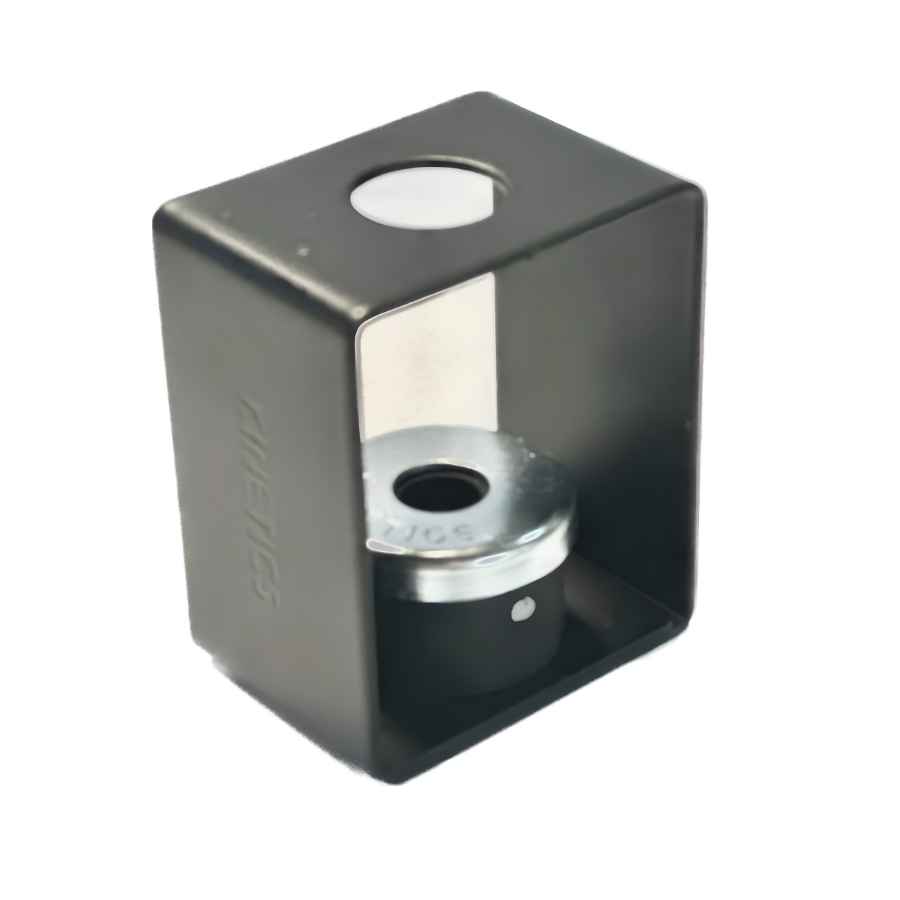
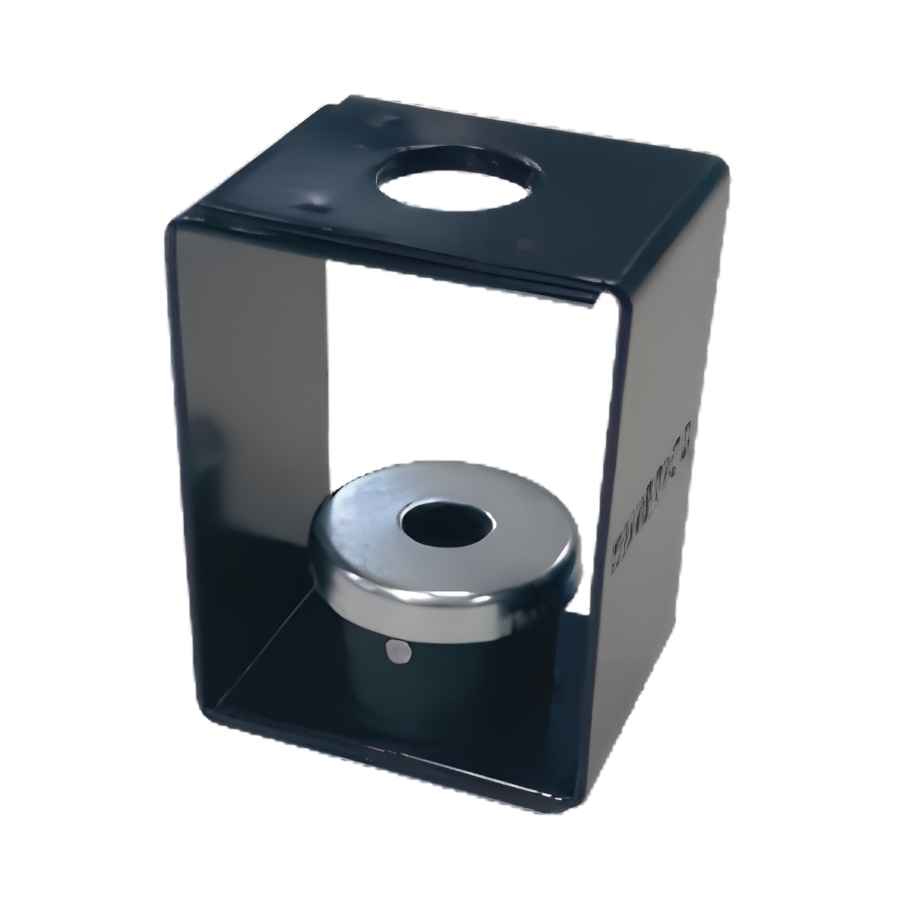
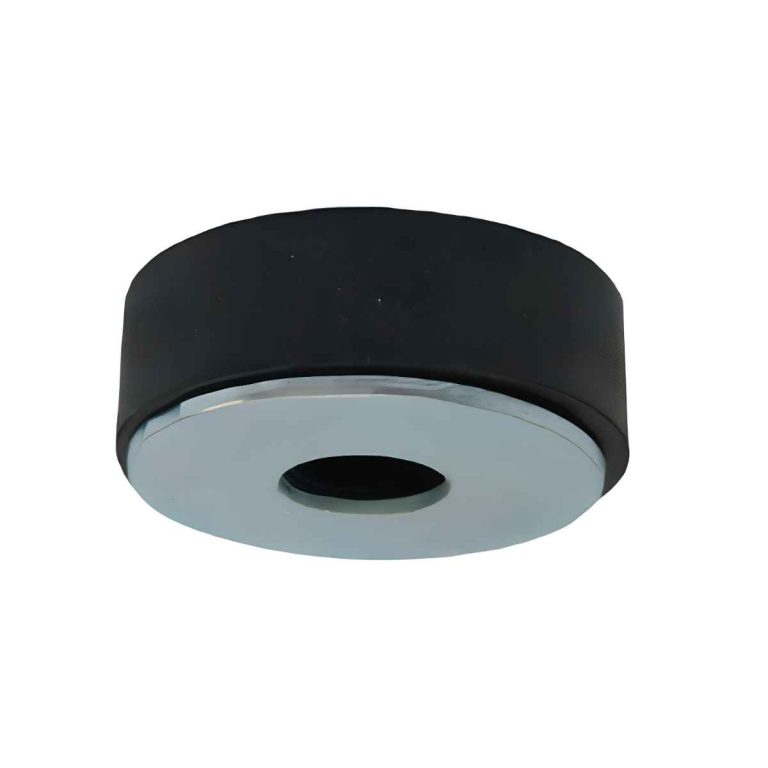
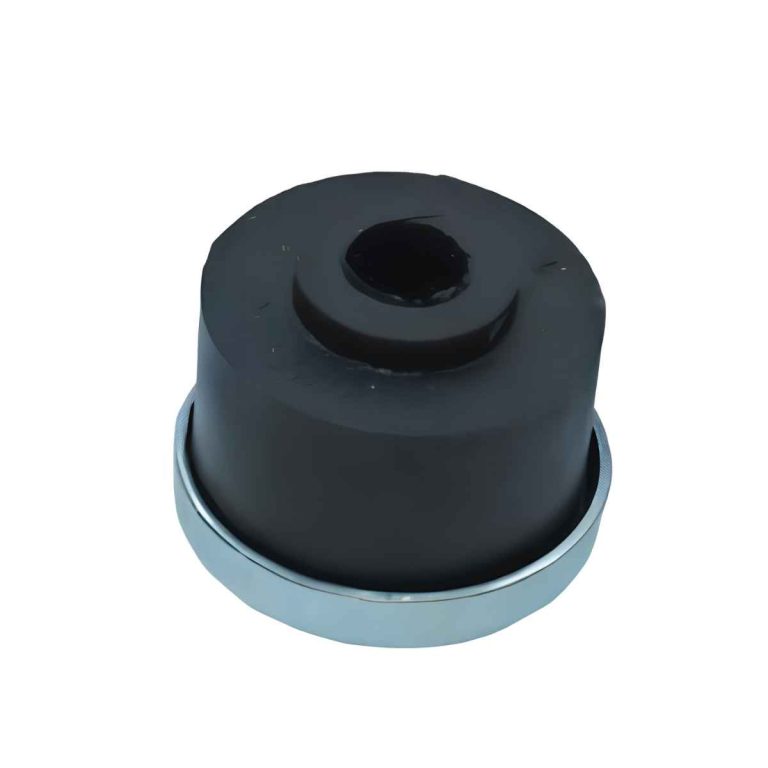
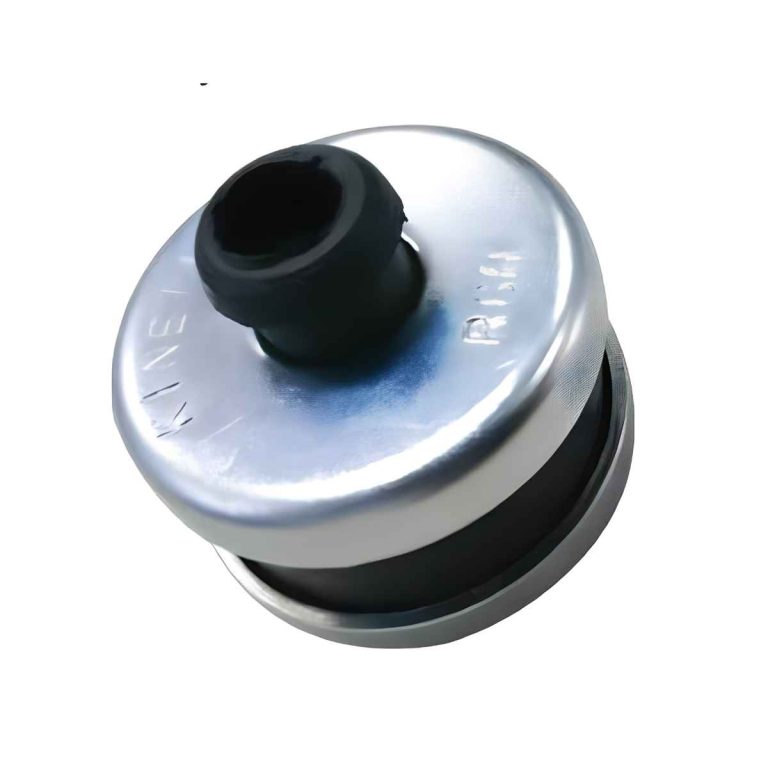
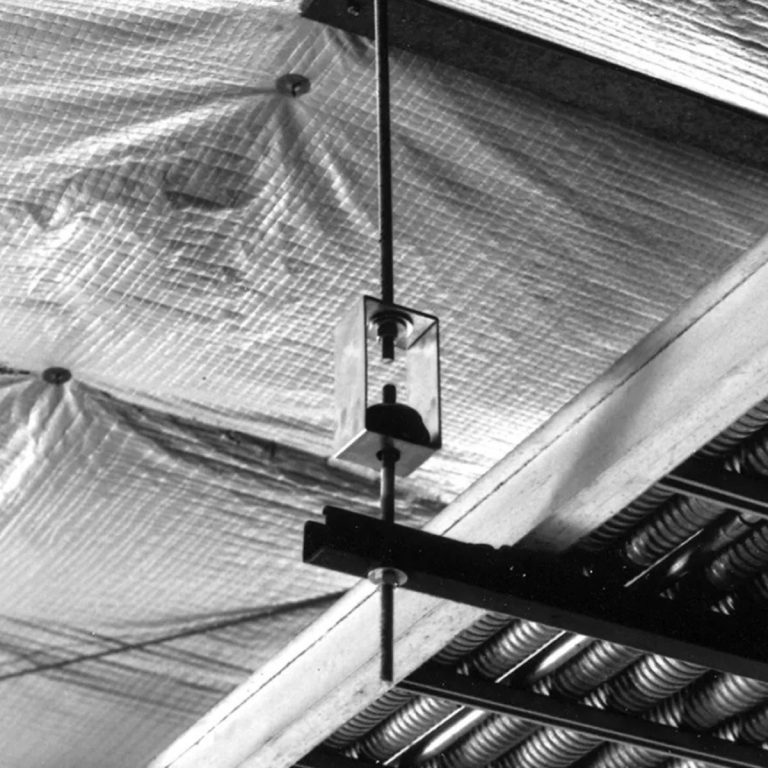
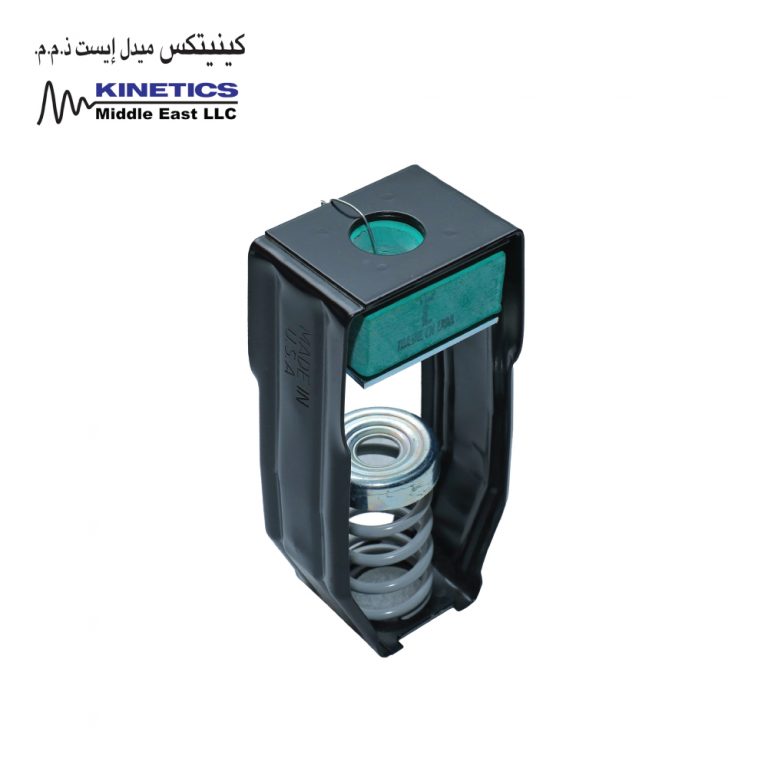
Kinetics Model RH-AD is a neoprene vibration isolation hanger designed to reduce vibration and noise transmission from suspended light mechanical equipment, piping and ductwork. It is intended for suspended sources of audible-frequency vibration and for the isolation of noise in piping and ductwork systems.
The RH-AD combines a colour-coded, oil-resistant elastomer-in-shear insert with a stamped load-transfer cap and steel hanger bracket. It provides a compact vibration-control solution for HVAC, MEP and building-services projects across the UAE, GCC, Middle East and MENA region.
What Is an RH-AD Neoprene Vibration Isolation Hanger?
The RH-AD creates a resilient separation between a suspended mechanical service and its supporting structure. The neoprene element is loaded primarily in shear rather than simple compression, increasing allowable strain without accelerating deterioration.
The steel bracket surrounds the isolation element while the stamped load-transfer cap distributes the applied suspension load. The arrangement helps reduce the rigid transmission path through which vibration and noise can enter the building structure.
RH-AD Applications
- Suspended light mechanical equipment
- HVAC ductwork vibration and noise isolation
- Suspended piping systems
- Light fans and ventilation equipment within the published load range
- Mechanical-room and plantroom services
- Commercial, residential, hospitality and healthcare developments
- Schools and other noise-sensitive occupied spaces
- UAE, GCC and MENA HVAC and MEP projects
RH-AD Models, Rated Loads and Deflection
| Model |
Rated Load |
Approximate Metric Load |
Elastomer Colour |
Published Rated Deflection |
| RH-30AD |
30 lb |
13.6 kg |
Silver |
0.30 in. / 7.6 mm |
| RH-45AD |
45 lb |
20.4 kg |
Red |
0.30 in. / 7.6 mm |
| RH-75AD |
75 lb |
34.0 kg |
Green |
0.30 in. / 7.6 mm |
| RH-125AD |
125 lb |
56.7 kg |
White |
0.30 in. / 7.6 mm |
Selection requirement: Select each RH-AD model according to the actual operating load imposed at that individual suspension point. Do not select all hangers from total equipment weight alone because weight distribution between suspension points may be unequal.
The published rated loads are maximum continuous operating loads. Final model selection must be confirmed against the approved vibration-isolation submittal and actual supported load.
RH-AD Construction and Technical Features
- Oil-resistant neoprene elastomer-in-shear element
- Colour coding for identification of load capacity
- Stamped load-transfer cap
- Stamped or welded steel hanger bracket
- Powder-coated bracket finish
- Optional zinc-electroplated bracket finish
- Bracket designed to withstand five times the rated load without failure
- Up to 30° support-rod misalignment without metal-to-metal short-circuiting
- Compact construction for suspended light mechanical services
- Suitable where the project requires neoprene isolation rather than high-deflection spring isolation
Published RH-AD Dimensions
| Drawing Reference |
Dimension |
Approximate Metric Dimension |
| L |
2.72 in. |
69.1 mm |
| W |
2.15 in. |
54.6 mm |
| A |
1.50 in. |
38.1 mm |
| Dmax |
0.38 in. |
9.7 mm |
| H |
0.87 in. |
22.1 mm |
Refer to the official RH-AD dimensional drawing for the location and meaning of each dimensional reference. Suspension rods and associated hardware are supplied by others.
How the RH-AD Reduces Vibration Transmission
Suspended equipment, ductwork and piping can transmit vibration through steel rods and supports into slabs, beams and other building elements. The RH-AD neoprene element introduces a resilient connection at the suspension point.
Loading the elastomer in shear permits controlled movement while supporting the suspended service. The hanger bracket also permits support-rod misalignment through a 30° arc without unintended metal-to-metal contact that could bypass the isolation element.
RH-AD or Spring Vibration Isolation Hanger?
RH-AD is intended for suspended sources of audible-frequency vibration and noise in piping and ductwork. Applications requiring greater static deflection or lower-frequency vibration isolation may require a spring-based hanger.
For combined spring and neoprene isolation, review the SRH Spring-Neoprene Vibration Isolation Hanger. For spring isolation, review the SH Spring Vibration Isolation Hanger.
View the complete Kinetics vibration isolation hanger range.
Technical Documentation
RH-AD Technical Support in the UAE and MENA
Kinetics Group supports acoustic consultants, MEP consultants, HVAC contractors, developers, procurement teams and facility managers across the UAE, GCC, Middle East and MENA region.
For RH-AD selection, provide the equipment or service description, operating weight at each hanger point, suspension arrangement, rod size, project location and specified vibration-isolation requirements.
Contact Kinetics Group for RH-AD product selection, technical submittals and project enquiries.
Frequently Asked Questions
What is the RH-AD neoprene vibration isolation hanger used for?
RH-AD is used to reduce vibration and noise transmission from suspended light mechanical equipment, piping and ductwork. It is intended principally for suspended sources of audible-frequency vibration and piping or ductwork noise.
Which RH-AD load capacities are available?
The available models have rated loads of 30, 45, 75 and 125 lb, equivalent to approximately 13.6, 20.4, 34.0 and 56.7 kg.
What is the published rated deflection of RH-AD?
Each RH-AD model in the published product table has a rated deflection of 0.30 in., equivalent to approximately 7.6 mm.
How is the correct RH-AD model selected?
Select the model according to the actual operating load carried by each individual hanger point. Confirm the selection against the approved project submittal rather than using total equipment weight alone.
Can RH-AD accommodate suspension-rod misalignment?
Yes. The hanger bracket is designed to permit support-rod misalignment through a 30° arc without metal-to-metal contact or another isolation short circuit.
Can RH-AD be installed in a seismic application?
The RH installation drawing contains a seismic installation detail involving structural clearance and an additional washer and nut below the hanger box. Final seismic suitability and installation must be confirmed by the project engineer and approved seismic submittal.
When should a spring hanger be used instead of RH-AD?
A spring or spring-neoprene hanger may be more appropriate when the application requires greater static deflection or lower-frequency vibration isolation than a neoprene hanger provides.